By Charles Pitts
The Oyu Tolgoi copper mine is transforming the global copper market from the heart of Mongolia’s South Gobi Desert. For decades, shifting sands and nomadic herders defined this landscape. Today, however, the steel headframes of one of the world’s most ambitious mining projects dominate the horizon. As of May 2026, Rio Tinto is actively reaping the rewards of its multi-billion-dollar underground investment. Furthermore, the latest production data confirms that this mine’s ramp-up is no longer a future promise — it is happening now.
More Read


What Is the Oyu Tolgoi Copper Mine?
The Oyu Tolgoi copper mine occupies Mongolia’s South Gobi Province, roughly 550 km south of Ulaanbaatar and just 80 km from the Chinese border. Rio Tinto operates the mine in partnership with the Mongolian government. Open-pit production began in 2013. Subsequently, the underground operation commenced production in 2023, marking a major turning point for the project.
In terms of commodities, the mine primarily produces copper, alongside significant volumes of gold, silver, and molybdenum. Rio Tinto manages the project as the majority partner, while the Mongolian government holds its stake through Erdenes Oyu Tolgoi. Notably, at full capacity, analysts project the mine will contribute over 30% of Mongolia’s GDP. Moreover, the operation is expected to run for more than 50 years.
More Read

- Location: South Gobi Province, Mongolia (550 km south of Ulaanbaatar)
- Distance from China border: 80 km
- Key Commodities: Copper, gold, silver, molybdenum
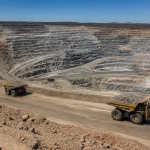
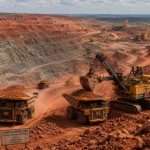
- Mining Methods: Open-pit surface mining and underground block caving
- Annual Peak Output: ~500,000 tonnes of copper (roughly 3% of global supply)
- Mongolian Workforce Share: Over 90% of all employees
- Underground Tunnels: 200 km upon full completion
- Projected GDP Contribution: Over 30% of Mongolia’s GDP at peak
Oyu Tolgoi Copper Mine Production: 500,000 Tonnes and Beyond
The Oyu Tolgoi copper mine operates at an extraordinary scale. In 2025, the operation increased consolidated copper production by 11%, reaching 883,000 tonnes. Consequently, this growth made OT the primary driver of global copper supply expansion. Then, in Q1 2026, Rio Tinto recorded a further 9% year-on-year rise in copper-equivalent production. As a result, the mine now ranks as the most significant new copper source on the planet.
Rio Tinto currently targets peak production of approximately 500,000 tonnes of copper per year between 2028 and 2036. To achieve this, the team must successfully ramp up “Lift 1” of the underground ore body. Specifically, engineers use a block-caving method, where the ore body collapses in a controlled way into large funnels. This approach demands precision and constant monitoring at every stage.

The scale of this output is difficult to overstate. At full capacity, the Oyu Tolgoi copper mine will produce enough copper each year to manufacture more than 6 million electric vehicles. This output is especially critical because the market already faces a structural copper deficit in 2026. In fact, the global shortage stems largely from a lack of new Tier 1 discoveries worldwide.
Oyu Tolgoi Copper Mine: Major Milestones
- 2009: Rio Tinto and the Mongolian government sign the investment agreement
- 2013: Open-pit production begins
- 2022–2023: Underground production launches
- 2025: Consolidated copper output climbs to 883,000 tonnes (+11% YoY)
- 2028–2036: Projected peak production period at ~500,000 tonnes/year
- 2030: Mine expected to rank as the world’s fourth-largest copper producer
Geology of the Oyu Tolgoi Copper Mine Deposits
The Oyu Tolgoi copper mine sits on a series of porphyry deposits rich in copper, gold, silver, and molybdenum. Mineralization extends across a 26 km structural corridor. Geologists identify four main deposit areas: Oyut, Hugo North, Hugo South, and Heruga. Each deposit offers a distinct geological profile and contributes differently to the mine’s long-term resource base.
Hugo North and Hugo South at Oyu Tolgoi
The Hugo Dummett deposits host porphyry-style mineralization linked to quartz-monzodiorite intrusions. These intrusions sit beneath Upper Devonian and Lower Carboniferous sedimentary and volcanic rocks. Both deposits extend over 3 km in a north-northeast direction.
A 110°-striking fault separates Hugo North from Hugo South. This fault dips between 45° and 55° north. Furthermore, the highest-grade copper in Hugo North concentrates in the QV90 zone. In this zone, more than 90% of the rock contains over 15% quartz veining, making it one of the richest copper zones on the property.
Oyut Deposit
The Oyut deposit contains several mineralized zones: Southwest Oyu, South Oyu, Wedge, and Central Oyu. Over 80% of the Southwest Oyu zone consists of porphyritic augite basalt. The high-grade core measures roughly 250 m in diameter and extends to depths of up to 700 m. The open pit currently mines most of these zones.
Heruga Deposit
Heruga sits at the southernmost point of the Oyu Tolgoi property. It is a copper-gold-molybdenum porphyry with a molybdenum-rich cap at higher elevations, underlain by gold-rich mineralization at depth. Mineralization begins 500–600 m below the surface. In addition, the deposit extends over a 2.3 km drilled length and splits into at least two structural blocks along north-northeast faults.
Rio Tinto’s Strategy at the Oyu Tolgoi Copper Mine
Rio Tinto credits much of its success at the Oyu Tolgoi copper mine to its “Stronger, Sharper, and Simpler” strategic overhaul. This is not simply corporate language. Rather, it reflects a fundamental shift in how the company runs high-capex frontier projects in remote locations.
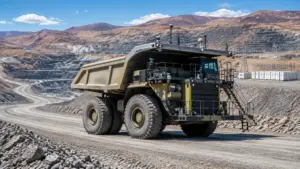
The “Sharper” pillar centers on technical automation. Rio Tinto uses OT as a live testing ground for autonomous haulage vehicles and remote monitoring systems. These technologies actively reduce unit costs in one of the world’s harshest operating environments. Meanwhile, the “Simpler” pillar flattens the organizational structure. This reduces delays and miscommunication between Rio Tinto’s global headquarters and the Mongolian site team.

By 2030, Rio Tinto aims to grow its copper-equivalent output by 20% across its global portfolio. Therefore, the Oyu Tolgoi copper mine sits at the center of this strategy. Furthermore, annual capital expenditure will fall below $10 billion after 2028 once Rio Tinto completes the heaviest construction work at OT and at the Simandou iron ore project. At that point, the company shifts decisively from growth mode into cash-generation mode.
Jurisdictional Risk at the Oyu Tolgoi Copper Mine: Taxes, Debt, and Sovereignty
Despite its technical achievements, the Oyu Tolgoi copper mine faces serious jurisdictional risk. The Mongolian government holds a 34% stake through Erdenes Mongol LLC. However, tensions between Ulaanbaatar and Rio Tinto are rising again in 2026.
In February 2026, Mongolia’s General Department of Taxation issued a MNT 1.6 trillion tax reassessment against the project. This came on top of an existing MNT 2.9 trillion dispute that already sits in international arbitration. In addition, the Mongolian Parliament launched a “Temporary Oversight Committee” in late 2025. This committee actively investigates how much financial benefit the state actually receives from the mine.
The root cause of this tension is straightforward. Mongolia owns one-third of the Oyu Tolgoi copper mine but has never collected a dividend payment. This is because the $12 billion in project debt must go back to Rio Tinto before Erdenes Mongol can receive profits. Consequently, Ulaanbaatar is pushing to lift the state’s effective revenue share to 60% through higher royalties and lower management fees.
For mine operators globally, this situation illustrates a key lesson: fiscal risk often outweighs geological risk. Moreover, as Mongolia monitors China’s evolving critical minerals strategy, it recognizes its leverage as a key copper supplier to the world’s largest consumer.
Infrastructure, Energy, and ESG at the Oyu Tolgoi Copper Mine
Energy supply presents another significant challenge for the Oyu Tolgoi copper mine. For years, the mine drew electricity from China’s Inner Mongolia power grid. This arrangement is both expensive and strategically risky. Therefore, Rio Tinto treats the development of a domestic Mongolian power plant as a top priority. Nevertheless, infrastructure projects in remote desert regions routinely face delays and cost overruns.
Securing local energy also serves a critical ESG purpose. Investors increasingly require mining companies to reduce their carbon footprint. As a result, Rio Tinto is actively working to transition OT away from coal-heavy Chinese power. The goal is a balanced mix of domestic thermal energy and renewable sources.

Water consumption is an additional concern in this arid environment. The Gobi Desert receives very little rainfall annually. In response, Rio Tinto deploys water-recycling technology across site operations. Furthermore, the mine borders traditional nomadic herding communities. Therefore, ongoing dialogue around land use, environmental impact, and community compensation remains an active part of how Rio Tinto manages local relations at the Oyu Tolgoi copper mine.
The 2030 Outlook for the Oyu Tolgoi Copper Mine
The Oyu Tolgoi copper mine stands on a clear path toward becoming a top-three global copper producer. However, that path runs through significant obstacles. On one hand, the engineering performance is exceptional. On the other hand, the geopolitical environment demands equal attention.
The next 24 months will determine the trajectory of the entire project. If Rio Tinto holds its 9% growth rate and successfully resolves the outstanding tax disputes, then the Oyu Tolgoi copper mine will anchor global copper supply through the 2030s. Conversely, if Mongolia’s parliamentary investigation pushes toward debt forgiveness or royalty restructuring, the project’s financial returns could shift dramatically for all parties.

Ultimately, the Oyu Tolgoi copper mine represents more than one company’s bet on frontier geology. It is a live test of whether the mining industry can deliver long-term value in both shareholder returns and national benefit. The production numbers make a compelling case. Yet in the Gobi Desert, as in global resource politics, the environment and the negotiations are equally unforgiving.