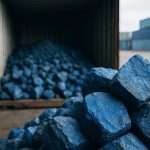
Brisbane, 27 September 2025 — The fallout from Queensland’s coal royalty regime has escalated into a high-stakes battle over jobs, investment, and the state’s fiscal stability. With BHP Mitsubishi Alliance (BMA) preparing to halt operations at its Saraji South coking coal mine from November, and Anglo American cutting roles across Brisbane and the Bowen Basin, the sector faces its sharpest contraction in years. More than 900 positions have already been flagged, with warnings the toll could surpass 1,000 by year-end.

BHP and Anglo Lead Job Cuts
BHP’s Saraji South, part of the Bowen Basin’s premium metallurgical coal complex, produced 8.2 million tonnes in FY2025. The company said its decision to shed ~750 jobs was driven by “softened coking coal prices and unsustainable royalty burdens.”
Anglo American followed suit, confirming reductions across its Brisbane head office and central Queensland operations. Local reports estimate ~200 roles are affected, many through voluntary redundancy.
Premier David Crisafulli responded with sharp criticism, calling on global miners to remain “committed investment partners.” Treasurer David Janetzki ruled out any retreat on royalty policy, stressing the need for fiscal predictability even in a downturn.
The 2022 Royalty Overhaul
The roots of the dispute lie in Queensland’s July 2022 overhaul of its coal royalty framework. The government added progressive, high-price tiers, which ratchet up royalty rates once export coal surpasses set thresholds. According to Queensland Treasury’s mineral royalty tables, the effective state take is now far above pre-2022 ceilings when benchmark prices climb.
The timing has compounded pain for miners. Coking coal, which briefly spiked above US$600/t in 2022, now trades closer to US$190/t. Meanwhile, labour, energy, and equipment costs have surged by as much as 50% in four years. Industry groups argue the royalty tiers, layered onto higher input costs, are pushing marginal operations into the red.
More Read

More Than Just Royalties
Independent analysis suggests deeper structural issues. The Institute for Energy Economics and Financial Analysis (IEEFA) estimates that several Queensland mines now at risk of closure were effectively “zombie assets” — mothballed during low-price cycles, restarted only during the 2022 boom, and now sliding back into loss-making territory.

This divergence frames the current political fight. Industry insists the royalty scheme is the decisive factor, while government and independent analysts argue geology, cost inflation, and price cycles are the real culprits.
Government Holds the Line
Despite mounting pressure, Brisbane has rejected calls to dismantle the 2022 royalty tiers. Officials argue that stability in fiscal settings is critical for long-term investor confidence and the state budget. Reports suggest limited relief measures may be considered — such as streamlining approvals or easing non-royalty cost burdens — but no adjustments to the core structure.
More Read

In parallel, the government has confirmed that Queensland’s coal-fired power stations will continue to run until end-of-life, underlining a pragmatic approach to energy security even as renewables expand.
Industry Pushback and Jobs Outlook
The Queensland Resources Council (QRC) warns that more layoffs loom if policy is not eased. BHP’s cuts, combined with Anglo’s reductions, push confirmed 2025 job losses beyond 900 roles. Other mid-tier miners, including QCoal, have also signalled production slowdowns.
Adding to the strain, a recent industrial ruling mandating pay parity between labour-hire workers and staff could raise per-employee costs by A$20,000–30,000 annually. For older, high-strip-ratio pits, this may tip operations into closure.
Global Implications Beyond Queensland
Queensland supplies around 50% of the world’s seaborne metallurgical coal, feeding steel mills in Japan, Korea, and India. Reduced output from the Bowen Basin could tighten global supply, supporting prices but also amplifying volatility.
For investors, Queensland’s policy posture is a test case in resource rent management. Other jurisdictions — from Mongolia to Mozambique — are watching closely, weighing the balance between government revenue and investment competitiveness.
What’s Next
- Policy clarity: Whether Brisbane offers relief on approvals, freight bottlenecks, or power tariffs without altering royalties.
- Price trajectory: If met coal stabilises above cash-cost levels, suspended capacity could restart; if not, more mines will shift into care and maintenance.
- Corporate strategy: Miners may prioritise copper, nickel, and battery metals in capital allocation, with Queensland coal slipping down the boardroom agenda.
Skillings analysis
- Cycle vs. signal: Royalties accentuate the cycle, but do not cause it. Mines with deepening strip ratios and rising labour costs were always at risk once 2022’s price surge faded.
- Investor focus: Expect Queensland to trade marginal production for budget stability. Low-cost, long-life assets with flexible output will remain insulated.
- Steel market ripple: Asian buyers may diversify further into U.S., Canadian, and Mozambican supply, shifting freight and quality premia. This could support benchmark met coal indices even in a subdued global steel market.
Closing Outlook
As Queensland holds firm on royalties and miners weigh their options, the standoff highlights a structural shift: the end of the “boom-bust rescue cycle” for marginal coal pits. The coming quarter will test whether fiscal stability outweighs short-term employment shocks, with broader consequences for global metallurgical coal markets heading into 2026.