The geopolitical chess match over critical minerals has reached a fever pitch in April 2026. As the world transitions toward a decarbonized economy and advanced defense systems, the rare earth elements (REE) supply chain has moved from a niche industrial concern to a top-tier national security priority. For operators and investors, understanding the “Post-China” landscape is no longer about hypothetical decoupling; it is about navigating a fragmented, high-stakes market where refining capacity is the new currency.

China currently maintains a formidable grip, controlling approximately 88–90% of global refined rare earth production and nearly the entire permanent magnet supply chain. However, as we look toward the 2026–2030 horizon, the emergence of alternative hubs in North America, Australia, and Africa is finally beginning to shift the needle.
The China Chokehold: Understanding the Baseline
To succeed in the rare earth sector, one must first respect the depth of China’s dominance. This is not merely a matter of geology: rare earths are relatively abundant in the Earth’s crust: but a matter of processing infrastructure and environmental tolerance.
In July 2025, Beijing implemented new interim measures that tightened the screws on the global market. These regulations mandated monthly production reporting, strict quota tracking, and direct data submissions to government platforms. This move was designed to prevent oversupply that could crash prices, but more importantly, it solidified the state’s ability to use REEs as a strategic lever. Under China’s 15th Five-Year Plan (2026–2030), the focus has shifted from raw volume to high-end downstream manufacturing, particularly in high-performance neodymium-iron-boron (NdFeB) magnets.
More Read

For Western buyers, the risk is twofold: price volatility and physical scarcity. The U.S. military, for instance, currently maintains only a two-month buffer of certain critical rare earths, leaving a narrow margin for error in the event of an export ban.

The 2026 Supply Chain Scoreboard: Winners and Losers
As we analyze the 2026 Critical Minerals Scoreboard, a clear trend emerges: the winners are those moving beyond simple extraction.
The Midstream Bottleneck
The “Post-China” supply chain faces its greatest hurdle not at the mine site, but at the refinery. Refining rare earths is a chemically intensive process that produces significant toxic waste. China’s long-term lead is largely due to its established, low-cost processing clusters.
More Read

However, 2026 marks a turning point. The U.S.-backed REalloys project is on track to deliver its first batch of integrated magnet products by early 2027. Similarly, the Pentagon-funded $120 million heavy rare earth separation facility in Texas, operated by Australia’s Lynas Rare Earths, is nearing operational readiness. These facilities are the “missing links” required to turn raw ore into the high-purity oxides needed for high-tech applications.
Strategic Regional Shifts
We are seeing a massive geographic diversification. Africa is quickly becoming a strategic anchor for critical minerals, with the Lobito Corridor facilitating the export of minerals from the DRC and Zambia. While much of the focus has been on copper and cobalt, the rare earth potential in the region is drawing significant interest from European and American “Mineral Security Partnership” (MSP) members.
Secondary Material Recovery: The Faster Alternative
One of the most significant shifts in 2026 is the rise of “urban mining” and secondary material recovery. Developing a greenfield rare earth mine can take 10 to 15 years due to permitting and infrastructure requirements. In contrast, recycling e-waste and industrial tailings can bypass these delays.
Companies like Vulcan Elements and ReElement Technologies have demonstrated that extracting REEs from end-of-life permanent magnets and industrial waste can create a closed-loop supply chain. This approach is not only faster but often carries a lower ESG risk profile, a factor increasingly important for Western OEMs (Original Equipment Manufacturers).

Table 1: Comparison of Primary Mining vs. Secondary Recovery Timelines and Capital Expenditure (2026 Estimates)
| Feature | Primary Mining (Greenfield) | Secondary Recovery (Recycling) |
|---|---|---|
| Time to Market | 10–15 Years | 2–4 Years |
| Permitting Complexity | High (Environmental/Tailings) | Medium (Industrial/Chemical) |
| Capital Intensity | $500M – $1B+ | $50M – $150M |
| China Dependency | High (Refining usually required) | Low (Domestic processing) |
The Geopolitical Forge: Alliance Building
The recent 2026 Critical Minerals Ministerial underscored the collective resolve of 54 nations to break the China chokehold. This alliance is focusing on “friend-shoring”: ensuring that supply chains remain within politically aligned jurisdictions.
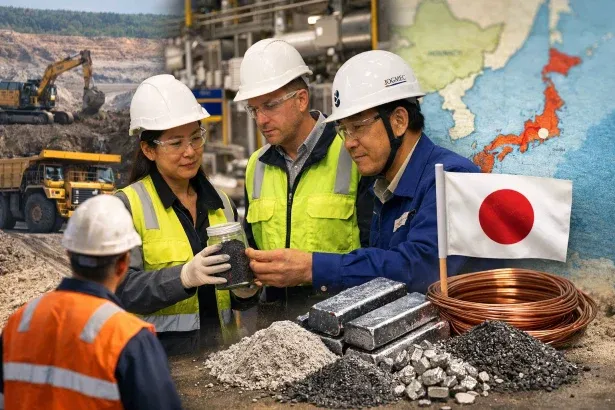
Japan remains a leader in this space, having spent over a decade diversifying its supply after a 2010 export spat with China. Today, Japanese mining engineers are collaborating globally to secure long-term offtake agreements.
Market Outlook: Price Drivers and Risks
Investors should view the rare earth market with cautious optimism. While the total global market value is relatively small: often compared to the size of the North American avocado market: its industrial leverage is massive. Without $5 worth of neodymium, a $50,000 electric vehicle cannot function.
Key Drivers for 2026-2027:
- EV Adoption: Despite some cooling in the pace of growth, the demand for high-efficiency motors continues to drive NdPr (Neodymium-Praseodymium) prices.
- Defense Stockpiling: The U.S. and EU are aggressively building strategic reserves, providing a price floor for heavy rare earths like dysprosium and terbium.
- Antimony Scarcity: The antimony supply crunch has alerted the market to how quickly narrow supply chains can break, leading to a “fear premium” in other critical mineral sectors.
Risks to Monitor:
- Technological Substitution: High prices drive innovation. Some automakers, like Tesla, have investigated permanent-magnet-free motors to reduce dependency.
- Chinese Price Dumping: China has the capacity to flood the market with cheap refined product to bankrupt emerging Western competitors before they reach scale.
Strategic Recommendations for Industry Participants
To navigate this landscape, businesses must move from a “just-in-time” to a “just-in-case” supply chain philosophy.
- Transparency and Provenance: Implement blockchain or digital twin systems to track rare earth sourcing. As regulations like the EU Battery Passport mature, knowing the “bloodline” of your minerals will be a prerequisite for market access.
- Invest in Midstream: For investors, the most significant upside lies in companies that control processing technology. Mining the dirt is the easy part; separating the 17 rare earth elements is where the value is captured.
- Monitor the 2026 Lithium and Gold Trends: Rare earths do not exist in a vacuum. Market liquidity and capital flow often follow broader commodity cycles. Understanding the lithium forecast for 2026 or the gold price bull case provides context on how investors are treating high-risk, high-reward resource plays.

Conclusion: The Long Game
Breaking China’s dominance is a multi-decade project, not a quarterly goal. While 2026 has shown remarkable progress in building the “Post-China” supply chain, dependency on Chinese heavy rare earths will likely persist for at least another five years. Success in this sector requires patience, strategic government partnerships, and a relentless focus on processing innovation.