By Penny Langford
Rio Tinto will partner with Chilean state miner Codelco to develop the Maricunga lithium project, committing up to $900 million in a deal that signals the mining giant’s aggressive entry into the lithium market.
The partnership marks a significant milestone in Chile’s effort to expand its lithium output through public-private collaborations under its National Lithium Strategy.
Rio Tinto will hold a 49.99% stake in the joint venture while Codelco retains a controlling 50.01% interest.
The investment structure includes $350 million upfront for study and pre-development work with another $500 million due upon a final investment decision (FID).

A final $50 million payment is contingent on achieving commercial production milestones by the end of 2030.
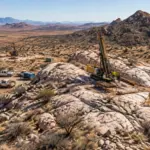
Located in northern Chile’s "Lithium Triangle," the Maricunga salt flat features some of the highest brine concentrations in the world.
Strategic partnership and deal structure
The formation of the Salar de Maricunga SpA vehicle follows months of negotiations between the London-based diversified miner and the world’s largest copper producer.
Rio Tinto CEO Jakob Stausholm said the partnership combines the company's technical expertise with Codelco's regional leadership to secure a long-term lithium supply.
The deal allows Rio Tinto to bypass the lengthy process of acquiring greenfield concessions in a country where lithium is legally classified as a non-concessionable resource.
By partnering with Codelco, Rio Tinto gains immediate access to a Tier 1 asset while navigating the complex regulatory landscape of the Kast administration.
Chilean officials noted the deal aligns with national goals to attract private capital and advanced technology without surrendering state oversight of strategic minerals.
Market Snapshot: Commodities and Energy Transition Metals
| Commodity | Price (USD) | 24h Change |
|---|---|---|
| Copper (lb) | $4.45 | +1.2% |
| Lithium Carbonate (t) | $16,200 | -0.5% |
| Gold (oz) | $2,410 | +0.3% |
| Iron Ore (t) | $112 | -0.8% |
Operational phases and technology deployment
The Maricunga project is planned as a multi-stage development to manage technical risk and capital allocation.
Phase I will utilize traditional evaporation-pond technology to target an initial production capacity of 15,000 to 20,000 tonnes per annum of lithium carbonate equivalent (LCE).
This conventional approach provides a proven path to first production by the end of the decade.

Phase II aims to ramp up total capacity to 55,000 tonnes per annum LCE by 2033 through the deployment of Direct Lithium Extraction (DLE) technology.
Rio Tinto intends to use its proprietary DLE process to increase lithium recovery rates and reduce the environmental footprint of the operation.
DLE technology allows for the re-injection of spent brine into the salt flat which helps maintain the local hydrological balance.
The use of advanced extraction methods is a core requirement of Chile’s modern mining regulations.
Navigating the Chilean National Lithium Strategy
The Maricunga deal is a litmus test for Chile’s updated lithium framework which prioritizes state-led joint ventures.
While some investors have expressed concern over the mandatory 50.01% state stake, Rio Tinto’s entry suggests major players are willing to accept minority positions for high-quality assets.
The Chilean Ministry of Mining recently confirmed that over 50 companies expressed interest in the 2024 RFI process for new lithium developments.
Government data shows that nearly 80% of these proposed projects intend to utilize DLE technology.
This shift toward sustainable extraction is part of a broader trend where lithium frontier regions are competing for capital based on ESG credentials.
The Kast administration has worked to streamline non-environmental permits through the new Office of Sectoral Authorizations and Investment (OASI).
Rio Tinto’s critical minerals pivot
The $900 million commitment to Maricunga follows Rio Tinto's recent acquisition of Arcadium Lithium and its ongoing work at the Rincon project in Argentina.
These moves demonstrate a clear strategic shift toward battery materials as the company balances its iron ore and copper portfolios.
The company is positioning itself to capitalize on the uranium demand and energy transition trends that are reshaping global mining investments.
Analysts suggest that securing stable lithium supply from the Lithium Triangle is critical for Western supply chain security.
Rio Tinto’s deep pockets and technical bench provide Codelco with the necessary tools to develop complex brine resources.
Infrastructure and logistics in the Lithium Triangle
The Maricunga salt flat sits at an elevation of roughly 3,700 meters which presents significant logistical challenges for construction and operation.
Developing the site requires reliable access to power, water, and transportation networks.
The joint venture will benefit from shared infrastructure initiatives designed to lower the overall capital intensity of projects in the region.
Modern equipment including autonomous haulage and advanced telemetry will likely be integrated into the site’s operations.

Advanced fleet management systems are becoming standard for large-scale mineral extraction projects aiming for high ROI in 2026.
Companies are increasingly looking at how autonomous haulage vs traditional mining impacts the bottom line in high-altitude environments.
Environmental and community engagement
A key component of the Maricunga project is the focus on community consultation and environmental monitoring.
Rio Tinto and Codelco have committed to a "net-zero water" approach by utilizing desalinated water or brackish water sources where possible.
The joint venture will also implement a rigorous environmental monitoring system to track changes in the salt flat’s ecosystem.
Local Indigenous communities are expected to participate in the project through employment opportunities and shared benefit agreements.
These social licenses are essential for maintaining long-term operational stability in Chile.
Global lithium supply and demand outlook
The 2026 lithium market remains characterized by price volatility as new supply enters the market.
However, the long-term deficit forecast for the late 2020s continues to drive massive investment from diversified miners.
The Maricunga project’s target of 55,000 tonnes per annum would make it a globally significant producer once at full capacity.
Investors are watching how this deal influences other potential partnerships in Chile’s Atacama and Infieles salt flats.
The relationship between Codelco and Rio Tinto may serve as a blueprint for future state-private partnerships across South America.

Key risks and project timeline
The primary risks for the Maricunga venture include technical challenges with DLE at scale and potential regulatory delays.
Obtaining the necessary environmental approvals (SEIA) in Chile remains a time-consuming process.
The final investment decision expected later this decade will depend on the successful completion of pilot-scale testing.
Currency fluctuations and political shifts in Chile could also impact the project's financial feasibility.
Nevertheless, the alignment between Rio Tinto’s capital and Codelco’s mineral rights creates a formidable partnership.
Summary of deal milestones
- Upfront Payment: $350 million for studies and engineering.
- FID Payment: $500 million for construction commencement.
- Production Milestone: $50 million if first lithium is produced by end-2030.
- Target Output: 55,000 tpa LCE by 2033.
- Ownership: Codelco (50.01%), Rio Tinto (49.99%).
The move follows a period of heavy investment in copper assets to meet the needs of AI data centers and global electrification.
Rio Tinto’s entry into Chile’s lithium sector confirms that the country remains a premier destination for mining investment despite its complex policy environment.

Social Media Snippet (LinkedIn/X):
Rio Tinto and Codelco have officially formed a $900 million joint venture to develop the Maricunga lithium project in Chile. This deal gives Rio Tinto a 49.99% stake in one of the world's highest-concentration salt flats, signaling a major move into the battery materials market under Chile’s National Lithium Strategy. Target: 55,000 tpa by 2033. #MiningNews #Lithium #RioTinto #Codelco #EnergyTransition #SkillingsMining