By Penny Langford
The global uranium market is entering a phase of structural transformation that few commodities have experienced in the last decade. As we look toward the 2026 horizon, the narrative is no longer just about the slow restart of mothballed mines or the geopolitical tension surrounding Central Asian supply. Instead, the focus is shifting toward a "circular" uranium economy: the recovery of high-grade material from legacy mine waste.
This shift, led by technological innovators like DISA Technologies and strategic partnerships with firms like Metals One, is emerging as a critical bridge to cover a supply gap that primary mining alone cannot fill. For investors and operators, the uranium price forecast 2026 is increasingly defined by how quickly these non-traditional sources can hit the market.
The 2026 Uranium Market Outlook: A Structural Squeeze
The uranium market outlook 2026 is anchored by a persistent primary supply deficit. Industry analysts, including those from Bank of America, have projected that spot prices could climb as high as $135/lb by 2026. This bullish sentiment is driven by three main factors: the electrification of heavy industry, the massive energy requirements of AI data centers, and the accelerating rollout of Small Modular Reactors (SMRs).

By 2026, the cumulative deficit in the uranium market is expected to exceed 20 million pounds annually. While traditional giants like Cameco and Kazatomprom are working to ramp up production, they face significant headwinds. Operational delays, such as those seen in Saskatchewan’s flooding issues, and the shifting of Russian supply toward the East have left Western utilities scrambling for "uncovered requirements": the reactor fuel needed for the latter half of the decade that has not yet been contracted.


Waste Recovery: The Metals One and DISA Breakthrough
In this environment of high prices and supply scarcity, the industry is turning its attention to the "forgotten" uranium sitting in old waste dumps. In the Uravan Mineral Belt of Colorado: a region that produced over 60 million pounds of uranium in the 20th century: a new model of production is taking shape.

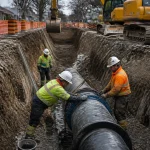
Metals One, a strategic player in the critical minerals space, has partnered with DISA Technologies to deploy a patented material liberation process at the Uravan project. Unlike traditional mining, which requires years of permitting for new pits and massive capital expenditure (CAPEX), this model focuses on treating abandoned mine waste rock and tailings.
How HPSA Technology Changes the Math
The core of this frontier is DISA’s High-Pressure Slurry Ablation (HPSA) technology. This process uses high-pressure kinetic energy to strip minerals from waste rock without the need for traditional chemical leaching at the initial stage.
For the 2026 outlook, this technology offers three distinct advantages:
- Low CAPEX and Rapid Deployment: The HPSA units are modular and mobile. They can be moved directly to legacy waste sites, bypassing the billion-dollar infrastructure costs associated with deep-shaft mining.
- Exceptional Grades from "Waste": Recent assays from the Uravan project have returned values as high as 4.1% U₃O₈ from surface waste rock. For context, many active mines operate on grades below 0.1%.
- Environmental Remediation: This is "green" uranium. The process removes up to 90% of uranium and radium-226 from legacy dumps, cleaning up old mining sites while producing a saleable concentrate.

Why 2026 is the Inflection Point
The year 2026 is widely viewed by analysts as the point where "panic contracting" among utilities could begin. As global nuclear capacity is expected to grow by nearly 50% by 2040, the immediate pressure on 2026 delivery schedules is immense.
Utilities are no longer just competing with each other; they are now competing with financial vehicles like the Sprott Physical Uranium Trust and new entities that treat uranium as a strategic reserve. This has forced a rethink of how SMR demand will impact the market. Because SMRs and AI data centers require 24/7 baseload power, the tolerance for supply chain disruption is zero.
| Market Driver | 2026 Impact | Price Pressure |
|---|---|---|
| Primary Deficit | ~20-30M lb shortfall | High |
| AI Energy Demand | Massive scale-up of baseload needs | Increasing |
| Geopolitics | Sanctions on Russian enrichment | Severe |
| Waste Recovery | New "swing" supply from legacy sites | Mitigating |
The Role of US Policy and Regulatory Tailwinds
The Metals One / DISA partnership is not operating in a vacuum. The US government has signaled a strong desire to secure domestic, Western-aligned supply chains for nuclear fuel. DISA recently became the first company to receive a U.S. Nuclear Regulatory Commission (NRC) service provider license specifically for remediating abandoned uranium mine waste.
This regulatory milestone is a game-changer. It allows for a streamlined permitting process that could see waste recovery projects contributing significant tonnage to the market by 2026. For operators, this represents a "royalty-style" revenue stream with minimal operational risk, as the waste is already above ground and the remediation provides a built-in ESG incentive.

Price Forecast 2026: Base, Bull, and Bear Cases
Based on current data and the emergence of waste recovery technology, we can refine the uranium price forecast 2026:
- Base Case ($95 – $110/lb): Gradual tightening continues. Waste recovery projects like Uravan begin contributing to supply, easing some pressure on spot markets but not enough to offset the loss of secondary Russian material.
- Bull Case ($135 – $150/lb): Significant operational disruptions at major mines (e.g., Kazakhstan or Canada) occur simultaneously with a "data center rush" for nuclear power. Utilities enter a period of aggressive spot buying to secure 2027-2028 fuel cycles.
- Bear Case ($75 – $85/lb): Global economic slowdown reduces electricity demand growth, and secondary supplies (stockpiles) prove more mobile than anticipated.
Conclusion: A New Era of Resource Management
The uranium market in 2026 will look fundamentally different from the market of 2020. The "New Frontier" of waste recovery represents a shift from the extractive mindset to a processing mindset. By leveraging technology to unlock value from what was previously considered a liability, companies like Metals One and DISA are providing a blueprint for the future of the industry.
For the mining professional and investor, 2026 will be the year where the "circular" supply chain proves its worth. As we move closer to this deadline, the ability to rapidly deploy modular technology at legacy sites may be the only thing standing between the market and a severe supply crisis.

Shareable Social Media Snippet
The #Uranium market is hitting a 2026 tipping point. With spot prices projected to hit $135/lb, a "New Frontier" is emerging: recovering uranium from legacy mine waste. Technology from DISA and Metals One is turning 20th-century waste into 21st-century fuel. Read the full analysis on the 2026 outlook. #NuclearEnergy #MiningNews #UraniumPrices #EnergyTransition