The White House just fired a shot across the bow of global critical mineral markets. On January 14, 2026, President Trump signed a proclamation declaring that imports of processed critical minerals and derivative products, PCMDPs, for those keeping score, pose a direct threat to American national security. But here’s the twist: instead of slapping immediate tariffs on incoming shipments, the administration is giving diplomacy a 180-day runway.

The move follows months of investigation by the Department of Commerce under Section 232, the same trade authority that’s been used to justify steel and aluminum tariffs in years past. This time, the crosshairs are squarely on the minerals that power everything from electric vehicles to fighter jets, and on the uncomfortable reality that China controls most of the global supply chain.
The Section 232 Hammer Drops
The Commerce Department launched its Section 232 investigation back in April 2025, tasked with determining whether critical mineral imports posed a national security risk. The answer came back unambiguous: yes, and it’s worse than most people realize.
According to the investigation’s findings, the United States was 100 percent net-import reliant for 12 critical minerals as of 2024. That’s not a typo. For a dozen minerals deemed essential to defense, energy, and advanced manufacturing, America produces exactly zero percent of its own supply domestically.

More Read

China’s grip on the market is even more staggering. The investigation confirmed that China serves as the leading producer of 30 out of 44 critical minerals globally. That’s not market participation: that’s market domination. And when geopolitical tensions flare, that kind of dependency becomes a strategic liability.

The investigation also highlighted a painful example that cuts to the heart of the problem: while the United States does produce rare earth oxides, it remains nearly 100 percent reliant on imported rare earth permanent magnets. In other words, America can dig the stuff out of the ground, but it can’t turn it into the finished components that actually go into missiles, turbines, and EVs. The processing and manufacturing capacity simply isn’t here.
Negotiation Before Escalation
Rather than going straight to tariffs: a move that would likely trigger retaliation and roil commodity markets: the Trump administration is opting for a negotiation-first approach. The proclamation directs the U.S. Trade Representative and Secretary of Commerce to pursue talks with foreign trading partners over the next 180 days.
More Read

The goal? Adjust import flows and secure adequate supplies of PCMDPs for American industry and defense. The method? A mix of diplomatic pressure and economic incentives, with price floors for critical minerals emerging as a central tool in the negotiation toolkit.
Price floors represent a significant policy shift. The idea is to establish minimum prices that importing nations must meet, effectively eliminating the race-to-the-bottom pricing that has undercut domestic mining investment for years. Extreme price volatility has been one of the biggest obstacles to private capital flowing into American mineral projects. When lithium prices can swing 70 percent in a single year, boardrooms get nervous about committing billions to new mines and processing facilities.

By setting a floor, the administration hopes to stabilize markets enough to make domestic investment viable again. It’s a gamble: price floors can distort markets and invite creative circumvention: but it signals a willingness to use trade policy as an industrial policy lever.
What Happens When the Clock Runs Out
The proclamation isn’t just a diplomatic gesture. It comes with teeth, even if those teeth are temporarily sheathed.
If negotiations prove unsuccessful, ineffective, or simply aren’t concluded within the 180-day window, the administration has explicitly reserved the right to implement alternative remedies. That means tariffs. It could also mean minimum import prices: a slightly different mechanism that functions like a tariff but applies to specific commodities rather than broad categories.
The language in the proclamation is deliberate: the White House is putting trading partners on notice that diplomacy is the preferred path, but it’s not the only path. Countries that drag their feet or refuse to engage may find themselves facing punitive trade measures that make their critical mineral exports significantly less competitive in the American market.
For mining companies operating overseas and selling into the U.S., this creates immediate uncertainty. For domestic producers, it creates potential opportunity: but only if the policy actually sticks and the price floor mechanisms prove workable in practice.
Allied Partnerships Take Center Stage
Not every trading partner is being treated as an adversary. The proclamation aligns with a broader diplomatic framework that distinguishes between strategic competitors like China and trusted allies like Australia and Japan.
The United States-Japan Framework for Securing the Supply of Critical Minerals, signed in October 2025, exemplifies this approach. That agreement emphasizes joint investments in mining, processing, and recycling: essentially building parallel supply chains that don’t run through Beijing.
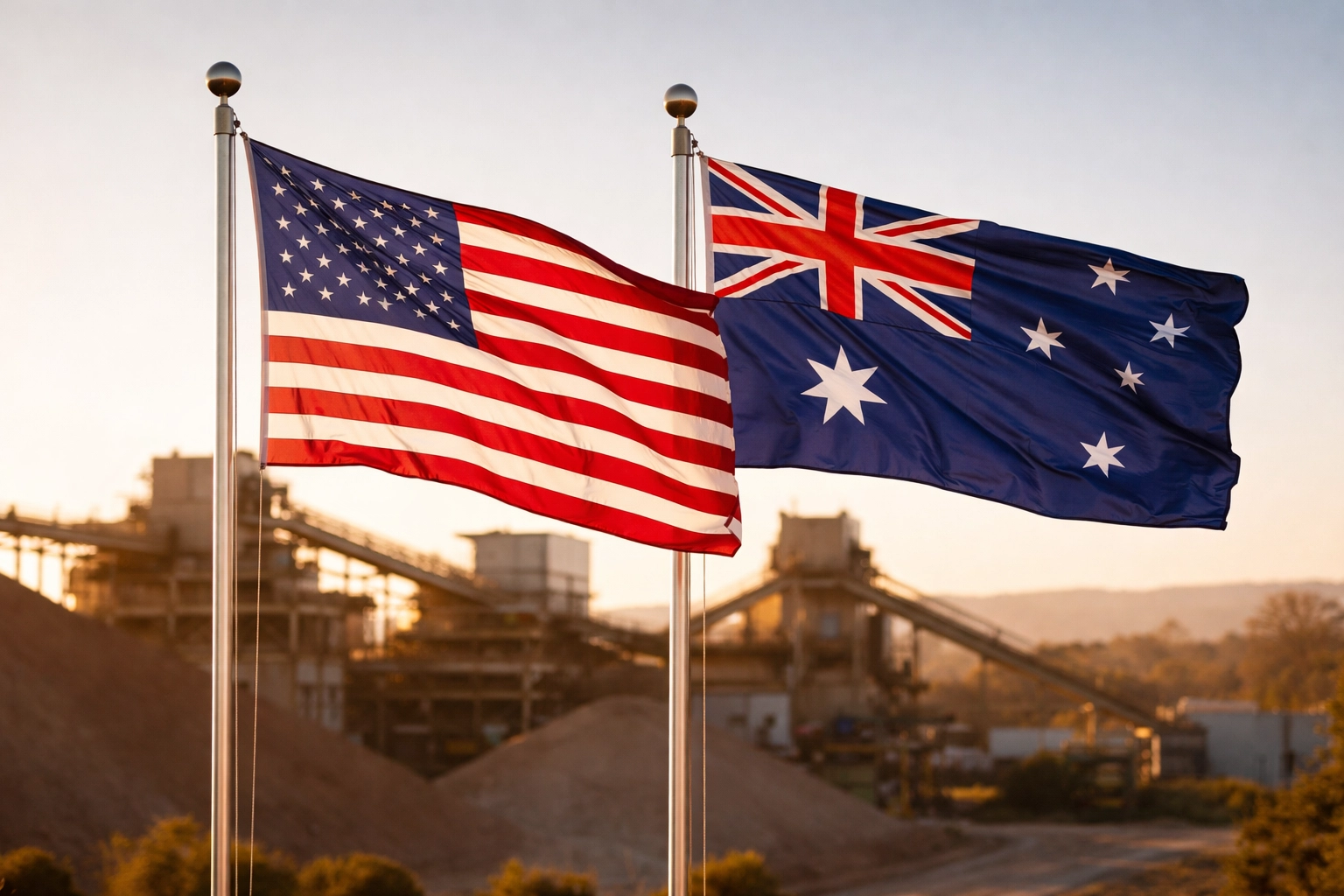
Australia, home to some of the world’s largest lithium and rare earth deposits, occupies a similar position. Australian miners have been positioning themselves as reliable alternative suppliers for years, and this proclamation could accelerate that trend. If American policy creates incentives to source from allies rather than adversaries, Australian and Japanese producers stand to benefit significantly.
The flip side is that these allied partnerships come with their own complications. Australia and Japan have their own strategic interests, their own domestic political pressures, and their own economic calculations. Aligning supply chains is easier said than done, especially when China can undercut prices and flood markets with cheap product whenever it wants to punish competitors.
The Bigger Picture for U.S. Mining
Zoom out from the immediate policy mechanics and the proclamation reveals something larger: a fundamental reorientation of how Washington thinks about minerals and mining.
For decades, American policy essentially treated critical minerals as a commodity problem: let the market sort it out, import what you need, and focus industrial policy on higher-value manufacturing. That approach worked fine in a world where geopolitical risk seemed manageable and global supply chains seemed stable.
That world is gone.
The combination of rising U.S.-China tensions, pandemic-era supply shocks, and the explosive demand growth from electrification has forced a reckoning. Minerals aren’t just commodities anymore. They’re strategic assets. And the countries that control them hold leverage over the countries that don’t.
This proclamation is the latest signal that Washington intends to rebuild domestic capacity, even if it means disrupting existing trade patterns and accepting higher input costs in the short term. The 180-day negotiation window is a pressure release valve: a chance for trading partners to adjust before harder measures kick in.
Whether that window leads to meaningful agreements or simply delays inevitable tariffs remains to be seen. But for the mining industry, the direction of travel is clear: critical minerals are now a national security priority, and policy is catching up to that reality.
For ongoing coverage of U.S. trade policy and its impact on the mining sector, visit Skillings Mining Review.
By Charles Pitts | Skillings Mining Review