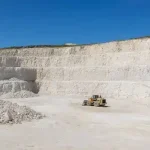
“When Digital Catapult unveiled its £400,000 investment in Optimal Slope pit design software this week, it wasn’t betting on batteries or hydrogen trucks. It was backing a different decarbonisation frontier: the geometry of the pit.

Optimal Slope, a UK-based deep-tech firm founded in 2021, has developed a software platform that automates the design of open-pit mine walls. By reducing the volume of waste rock excavated and hauled, the technology targets diesel consumption at its root – before a truck engine even starts. Less waste moved means fewer truck hours, smaller fleets, and lower Scope 1 emissions.
The funding, structured as a convertible loan note, is modest in scale. But its implications are not. Pit-wall design has long been a manual, iterative tradeoff between safety, stability and cost. Optimal Slope says it brings computational optimisation to a process where engineering judgment still dominates. Its goal: to embed emissions logic into the earliest planning stages of mine development.
How Optimal Slope Pit Design Software Cuts Scope 1 Emissions
The energy burden of haulage is well known inside mining circles. At many open-pit operations, diesel-powered trucks account for 25–30% of direct mining Scope 1 emissions. Every tonne of waste rock moved—especially in pushbacks or high-strip zones—compounds fuel burn and operating costs.
What’s less discussed is how those tonnes are locked in years before shovels bite. Bench angles, inter-ramp slopes, and geotechnical tolerances dictate the physical footprint of a pit – and thus the amount of non-ore material to be excavated. Subtle design choices can have large consequences over a mine’s life.
More Read

According to Optimal Slope, its software can achieve up to a 20% reduction in carbon intensity per site, by tightening the pit’s design envelope without compromising safety. The company has not disclosed independent verification, but the logic is aligned with wider decarbonisation strategies: structural reductions in material movement, as opposed to hardware substitution.

A Policy Signal: Efficiency as Climate Strategy
Digital Catapult mining investment isn’t just about tech. It represents a policy signal that operational efficiency – when carbon-costed – is a climate strategy. The UK innovation agency has previously backed AI, advanced materials, and quantum computing; its support for a pit-slope platform reflects a recognition that climate capital can reach upstream into core mining engineering.
“This is a smart play,” said an independent geotech consultant familiar with mine planning workflows. “Trucks are the tip of the spear, but geometry determines what they haul. If you can reduce waste by design, you reduce emissions by default.”
More Read
Optimal Slope plans to utilize the capital to expand in Australia, Canada, South America, and Africa—regions where strip ratios are high and mine decarbonization software mandates are tightening. The company says its product integrates with existing pit optimisers and mine planning tools.
Verification, Interoperability, and Carbon-Costed Models
The market is not without hurdles. Mining companies are conservative on slope stability for good reason: failure events can be catastrophic. Any reduction in inter-ramp angles or benching regimes must be backed by site-specific rock mass data and rigorous modelling. Third-party validation, especially of carbon savings, will be essential.
Integration is another concern. “If the outputs don’t plug cleanly into Deswik, Vulcan, or Hexagon platforms, uptake will stall,” said a former mining planner now advising on digital transformation.
Longer-term, Optimal Slope may benefit from regulatory changes. As carbon pricing spreads and Scope 3 accounting sharpens, companies may begin to explicitly cost carbon into mine design—elevating waste minimisation from a margin lever to a compliance necessity.
Geometry as Climate Tech
For decades, mine design was the domain of engineers, not climate strategists. That may be changing. As mining races to supply metals for the energy transition, operators are under pressure to do more with less diesel. Pit Geometry optimisation is one of the few interventions that can lower both emissions and costs – without waiting for a new truck fleet.
“Pit walls don’t excite many people,” said a sustainability director at a major miner. “But if they can cut 10–20% of our fuel bill, we’ll pay attention.”