Conventional wisdom suggests that to power the world with carbon-free nuclear energy, we must scar the earth with massive open-pit mines or cavernous underground tunnels. This narrative is outdated. It’s wrong.

The next generation of atomic fuel isn’t coming from a fleet of haul trucks and explosives. It’s coming from the quiet, chemically-driven precision of In-Situ Recovery (ISR). While traditional mining struggles with the weight of skyrocketing ESG requirements and the brutal CAPEX of deep-shaft development, ISR is quietly winning the efficiency war.
In 2026, the strategic calculus for uranium production has shifted. We are no longer just looking for the biggest ore body; we are looking for the most recoverable one.
The Chemistry of Invisible Mining
ISR technology fundamentally reimagines the mine as a laboratory. Instead of moving the rock to the surface to extract the metal, we move the metal through the rock.
The process is a closed-loop hydraulic circuit. We inject a lixiviant: typically a mixture of native groundwater fortified with oxygen and a mild complexing agent like sodium carbonate: directly into the ore-bearing sandstone. This solution oxidizes the uranium, dissolving it from the sand grains.
More Read

Extraction wells then pump this uranium-rich solution to the surface. It’s elegant. It’s precise. Most importantly, the rock stays exactly where it was.


At the surface, the solution passes through ion exchange (IX) columns. Think of it like a massive industrial water softener. The uranium adheres to resin beads, and the barren water is re-fortified and sent back underground.
More Read

Per facility, the footprint is negligible. That’s not a typo. Compared to a conventional mill, an ISR plant looks more like a small agricultural processing center than a heavy industrial site.
The Economic Moat: CAPEX vs. Reality
Mining engineers are currently staring down a global supply crunch. With the U.S. and China exchanging fresh tariffs and the energy transition accelerating, the cost of steel, fuel, and labor for conventional mining has become a throttle on new production.
ISR cuts through this. Because the “mining” is done by chemistry and hydrology, the capital requirements are drastically lower. You don’t need a $500 million fleet of Komatsus. You don’t need a multi-billion dollar tailings management facility.
The operational advantages are equally grim for the competition. ISR operations can be scaled modularly. If the market tightens, you drill more wellfields. If it softens, you throttle back the injection rates. This flexibility is impossible in a deep-shaft mine where the “sunk costs” are literally buried in thousands of feet of concrete and steel.
Case Study: Denison’s Phoenix Project and the Athabasca Breakthrough
For decades, ISR was relegated to low-grade, porous sandstone deposits in Wyoming, Nebraska, and Kazakhstan. The high-grade giants of the Athabasca Basin in Saskatchewan were thought to be “ISR-proof” because they weren’t hosted in traditional sandstone aquifers.
Denison Mines’ Phoenix project changed the narrative.
Phoenix represents a technical inflection point. It is one of the highest-grade undeveloped uranium deposits in the world. Conventional mining would require massive freezing of the ground to prevent water inflow: an expensive and energy-intensive nightmare.
Instead, Denison is deploying a “freeze wall” to create a containment perimeter and then utilizing ISR within that frozen shell. They aren’t just mining; they are terraforming the hydrology.

Suggested Prompt: A technical 3D cross-section diagram showing a uranium ISR wellfield with injection and extraction wells penetrating a sandstone aquifer, with a “freeze wall” perimeter for containment.
This isn’t just a pilot project anymore. The feasibility data is hammering out a clear message: the OPEX for Phoenix is projected to be among the lowest in the world. It proves that ISR isn’t just for “easy” geology. With enough engineering grit, it’s a tool for the highest-stakes environments.
Companies like Purepoint Uranium are also refining targets in these regions, signaling a broader industry pivot toward these smarter extraction methods.
The ESG Mandate: No Tailings, No Dust
ESG investors are often accused of being detached from the “dirty” reality of mining. With ISR, that gap closes.
The environmental advantages of ISR are its strongest selling point to the modern capital market:
- Zero Tailings: There are no massive piles of waste rock. No tailings ponds that require monitoring for the next century.
- Water Restoration: By maintaining a “pressure sink”: extracting slightly more water than is injected: operators ensure that no chemicals escape the target zone.
- Minimal Surface Disruption: Once the wells are capped, the land can return to its original state.
In a world where permitting a new open-pit mine can take 15 years, the lower impact of ISR translates directly into faster permitting cycles. Canada’s mining industry has warned that stockpiles are useless without infrastructure, and ISR provides a path to infrastructure that the public and regulators can actually stomach.
Operational Risks: You Can’t Disrupt Hydrology
But let’s be clear-eyed. ISR isn’t a magic wand. It is entirely dependent on geology.
If the host rock isn’t permeable, the lixiviant won’t flow. If the ore isn’t soluble, the chemistry won’t work. The risk moves from the “physical” (rock bursts, flooding) to the “analytical” (hydrological modeling, recovery rates).

Getting the “sweep efficiency” wrong: the percentage of the ore body touched by the lixiviant: can cripple a project’s economics. This is where the mining engineers earn their keep. In 2026, the most valuable person on a uranium site isn’t the blast foreman; it’s the hydrogeologist.
The Geopolitical Squeeze
Why does this matter right now? Because the clock is already ticking.
The global nuclear renaissance is no longer a “future” trend. It is the present. Small Modular Reactors (SMRs) and the extension of existing plant lifespans have created a demand floor that the current mining pipeline cannot meet.
Kazakhstan, the global leader in ISR production, has faced supply chain bottlenecks and inflationary pressures. This has left a vacuum in the Western supply chain. The U.S. and Canada are now racing to re-establish domestic fuel cycles.
ISR is the only technology that can bring new pounds to market fast enough to matter. Conventional mines are decade-long commitments. An ISR wellfield can be brought online in a fraction of that time.
The 2026 Outlook: A New Standard
We are moving toward a reality where “conventional” uranium mining becomes the outlier for everything but the most massive, high-grade basement-hosted deposits.
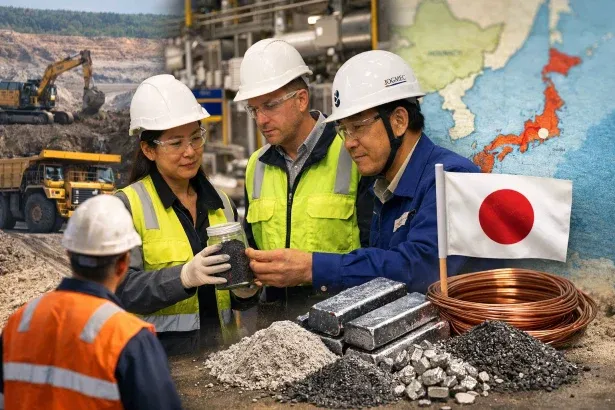
The strategic interest is clear. Japan is doubling down on strategic mineral supply chains, and the U.S. is viewing uranium as a matter of national security rather than just a commodity.
The “uncomfortable truth” for the old guard is that the era of moving mountains is ending. We don’t need to move the mountain if we can just talk to the rock.
Uranium ISR is the surgical strike of the mining world. It’s cleaner, it’s cheaper, and it’s the only way we meet the carbon goals of the 2030s. The industry is split: those who are mastering the fluid dynamics of ISR, and those who are going to be left behind with a very expensive pile of dirt.
There’s not enough to go around. The winners will be the ones who can extract the most with the least.