Here’s the thing nobody wants to admit: The mining industry’s decarbonization problem has always had a math problem attached to it. You can’t just swap out a diesel haul truck fleet for electric alternatives when your mine sits at 5,000 meters elevation in the Atacama Desert and your nearest grid connection is a hundred kilometers away. The capital cost alone would kill most projects before they started.

Which is why what just happened at Lundin Mining’s Caserones operation matters.
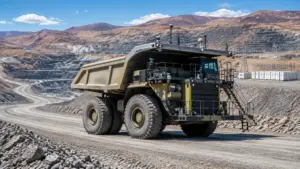
Caserones has become the first active mine site in the world to deploy an ultra-class haul truck with a hybrid-electric retrofit. Not a prototype. Not a demonstration unit parked in a test yard. A working Komatsu 930E, retrofitted with a Cummins First Mode hybrid package, hauling ore up steep ramps in one of the most demanding mining environments on the planet.
The results: 30% average fuel savings. 25% reduction in emissions. No additional infrastructure required.
That’s not incremental improvement. That’s a viable alternative to waiting another decade for battery-electric ultra-class trucks that may never pencil out for high-altitude operations.
More Read



What They Actually Did
The retrofit converts a conventional diesel-electric 930E into a hybrid configuration using an onboard energy storage system. The engineering is straightforward in concept, brutal in execution: capture the kinetic energy generated during braking events: which on steep haul ramps is substantial: and store it for redeployment during the loaded climb back up.
The energy storage system is configured specifically to absorb high-power braking cycles typical of open-pit profiles. Instead of dissipating that energy as heat through resistor grids, the system captures it and feeds it back to the traction motors during acceleration and grade climbing. This reduces peak loading on the diesel generator during the most fuel-intensive segments of the haul cycle.
More Read

Critically, this is a bolt-on retrofit kit. No major chassis modifications. No complete truck replacement. The hybrid package integrates with the existing 930E platform, which means mine operators don’t have to scrap functional assets to achieve meaningful efficiency gains.
For an industry that measures fleet replacement in decades, not years, that distinction matters.
The Numbers That Actually Matter
Fuel consumption on ultra-class haul trucks isn’t a line item. It’s a strategic cost driver that can swing project economics by millions annually. A single 930E can burn through 200-300 liters of diesel per hour depending on haul profile, payload, and ramp grade. At sites running 10-15 ultra-class trucks around the clock, annual fuel bills easily hit eight figures.
A 30% reduction in fuel consumption translates directly to operating cost relief: particularly relevant given that Caserones recently revised copper production guidance downward. When output drops, unit costs rise. Fuel efficiency becomes one of the few levers mine operators can pull to defend margins without waiting for metal prices to cooperate.
The 25% emissions reduction is equally strategic, though for different reasons. Chile has been tightening environmental regulations on mining operations, and decarbonization commitments are no longer optional for major producers. Lundin Mining, like every other operator in the region, is navigating increasingly aggressive emissions targets while maintaining production.

The hybrid retrofit offers a pathway to demonstrate progress on those targets without requiring full electrification infrastructure: no massive battery charging stations, no grid upgrades, no questions about power reliability at 4,500 meters elevation during winter storms.
Why Caserones Was the Test Bed
Caserones operates in one of the most challenging mining environments globally. The open-pit copper-molybdenum mine sits in Chile’s Atacama Region, roughly 125 kilometers southeast of Copiapó, at elevations ranging from 3,200 to 5,500 meters above sea level.
High altitude. Extreme temperature swings. Steep haul ramps. Variable ore grades.
If a hybrid retrofit can deliver consistent fuel savings under those conditions, it can work almost anywhere.
Lundin Mining holds a 70% stake in Caserones, which gives it direct operational control and the flexibility to pilot new technology without consortium-level approvals. The mine has been in production since 2013, meaning its haul truck fleet includes units approaching mid-life cycles: prime candidates for retrofits rather than replacements.
The timing also aligns with broader cost pressures across Lundin’s portfolio. The company recently cut group copper production guidance, citing lower-than-expected grades and operational challenges at multiple sites. Incremental efficiency gains from fuel savings won’t offset those production shortfalls, but they help defend unit cost targets during a period when copper prices remain volatile.

The Retrofit vs. Replacement Calculus
Here’s where this gets strategically interesting.
The mining industry has been told for years that decarbonization means electrification, and electrification means full fleet replacement. Battery-electric haul trucks are coming. Trolley-assist systems are proven technology. Hydrogen fuel cells are being piloted.
All of that is true. None of it is happening at scale in 2026.
Battery-electric ultra-class trucks face fundamental physics problems at high-altitude sites. Battery performance degrades in cold temperatures and thin air. Charging infrastructure requirements are massive. Payload capacity takes a hit when you’re hauling battery packs up and down steep grades. And the capital cost of replacing an entire ultra-class fleet is prohibitive for most operations, especially during periods of commodity price uncertainty.
Hybrid retrofits offer a different strategic equation: payload-neutral decarbonization. The energy storage system adds weight, but it’s designed to avoid compromising cargo capacity. The fuel savings deliver immediate OPEX relief. The emissions reductions support regulatory compliance and ESG reporting without requiring multi-year infrastructure builds.
And critically, the retrofit preserves existing capital. A Komatsu 930E represents a $5-7 million asset with an operational lifespan of 15-20 years. Scrapping functional trucks to make way for unproven battery-electric alternatives is a hard sell to CFOs and boards, particularly when those alternatives may not be viable for another decade.
The hybrid retrofit lets operators capture efficiency gains now, using proven technology, while keeping options open for future electrification as battery technology matures and infrastructure costs decline.
What Happens Next
Lundin Mining hasn’t announced plans to retrofit its entire Caserones fleet, but the pilot deployment serves as an in-field reference case. If the 930E hybrid continues delivering 30% fuel savings over extended operating cycles, the business case for fleet-wide rollout becomes compelling.
More broadly, this deployment establishes a benchmark for the industry. Other operators with high-altitude sites: Peru’s Cerro Verde, Escondida in Chile, Grasberg in Indonesia: face identical challenges with diesel dependence and decarbonization pressures. A proven retrofit solution removes the “wait for full electrification” excuse and shifts the conversation to near-term implementation.

First Mode and Cummins now have a reference site to pitch to other mine operators. The hybrid kit becomes a product, not a prototype. That accelerates commercialization timelines and potentially drives down retrofit costs as production scales.
For the broader mining equipment sector, this also signals that incremental efficiency gains may be more viable near-term than revolutionary technology shifts. The industry has spent years chasing moonshots: autonomous everything, full electrification, hydrogen-powered fleets. But the fastest path to lower emissions and better unit economics might be retrofitting existing assets with hybrid systems that work today, rather than waiting for perfect solutions that work tomorrow.
The Strategic Calculus Here Isn’t Subtle
Caserones just proved that ultra-class haul trucks can operate as hybrids in extreme conditions while delivering material fuel savings and emissions cuts. That changes the risk-reward equation for every operator currently running diesel-electric fleets at high-altitude sites.
The retrofit pathway offers immediate OPEX relief, regulatory compliance support, and ESG credibility without requiring billion-dollar infrastructure investments or multi-year fleet replacement cycles. It’s not a perfect solution. It’s a viable solution available in 2026, which in mining timelines is the equivalent of immediate.
Other operators will be watching the Caserones pilot closely. If the fuel savings hold and the hybrid system proves reliable over the next 12-24 months, expect retrofit deployments to accelerate across the industry.
The decarbonization timeline just got shorter. And it happened with a bolt-on kit, not a revolution.