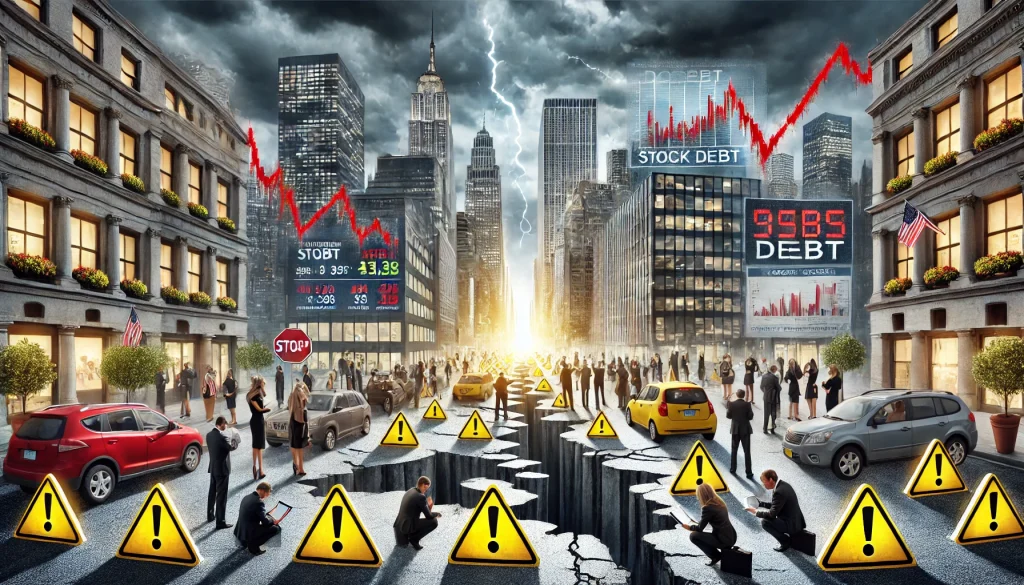
Donald Trump’s economy is facing increasing challenges as economists warn of potential trouble ahead. While the former president has pledged to revamp trade policies, cut government spending, and introduce tax reforms aimed at boosting growth, early warning signs suggest that his economic plans may not be unfolding as smoothly as expected.

Economists at the Royal Bank of Canada (RBC) have identified multiple “yellow flags” in the latest data, signaling potential weaknesses in Donald Trump’s economy. From declining consumer sentiment to rising debt levels, these indicators point to economic uncertainty that could weigh on future growth.
Consumer Confidence Is Slipping
One of the first cracks forming in Donald Trump’s economy is a drop in consumer and business sentiment. The University of Michigan consumer confidence survey declined in January after five months of growth, while the Conference Board’s index fell in both December and January. The NFIB small business survey revealed that only 15% of small businesses plan to create new jobs, a concerning sign for labor market stability.
While these surveys reflect “soft data”—indicating sentiment rather than actual economic activity—economists warn that if consumer confidence continues to deteriorate, it could translate into lower consumer spending, one of the key drivers of economic growth.
Related News
- Global Uranium Launches Geophysical Survey at Northwest Athabasca Joint Venture
- Copper Price Surges Amid 25% Tariff Threat
- Eco-Friendly Mining Technology: Tsay Keh Dene Nation Partners with Tersa Earth Innovations
- Macmahon Secures Underground Mining Contract for Poboya Gold Project
Stock Market Volatility Could Hurt Spending
The wealthiest Americans account for a significant share of Donald Trump’s economy, and their spending habits are closely tied to stock market performance. RBC economists Frances Donald and Mike Reid highlight that a sharp market downturn could lead to a negative wealth effect, where stock portfolios shrink, corporate earnings decline, and high-income consumers cut back on discretionary spending.
More Read

A recent American Association of Individual Investors survey indicated that bullish sentiment has dropped to levels seen only in major stock market downturns. If markets continue to experience tariff-related volatility, consumer spending could take a hit, further slowing economic growth.

Inflation Expectations Are Rising
Inflation remains a major concern in Donald Trump’s economy. Rising consumer and business inflation expectations suggest that Americans are anticipating higher costs, which could influence economic behavior in the coming months. If inflation continues to rise, the Federal Reserve may keep interest rates elevated, making borrowing more expensive for businesses and consumers alike.
Government Job Cuts Add to Uncertainty
Another warning sign in Donald Trump’s economy is the decline in public sector employment. In February, the federal government cut 10,000 jobs, and planned job cuts surged 103%, according to Challenger. Economists warn that government spending reductions could have ripple effects across the economy, affecting contractors, universities, and other institutions that depend on federal funding.
More Read

Some universities have already frozen hiring, a move that could weaken local job markets and slow overall economic momentum. If government downsizing continues, it could dampen growth in key industries reliant on public funding.
Consumer Debt Is Reaching Alarming Levels
Americans added $56 billion in non-real-estate debt in just two months, with the majority of it going onto credit cards. As a result, households are now spending 2.5% of their monthly disposable income on non-mortgage interest payments. With the Federal Reserve maintaining high interest rates, the cost of borrowing is increasing, making it harder for consumers to manage their debt.
This growing debt burden is already impacting economic activity. Real personal spending fell by more than 5% year-over-year in January, according to RBC’s economists. If consumer debt levels continue to rise, the risk of a broader economic slowdown will increase.
Will Donald Trump’s Economy Achieve a Soft Landing?
Despite these warning signs, RBC still expects Donald Trump’s economy to achieve a soft landing rather than a full-blown recession. However, economists caution that uncertainty itself may be influencing key economic indicators. If business and consumer confidence remain weak, these concerns could spill over into the real economy, leading to slower growth and financial instability.
With inflation pressures, stock market volatility, rising debt, and job cuts all adding to economic uncertainty, economists will be closely monitoring these trends in the coming months. Whether Donald Trump’s economy can navigate these challenges successfully remains to be seen.