The U.S. Department of Energy has selected Missouri S&T to develop a national mining technology proving ground in Rolla, Missouri. The facility will give researchers and industry a dedicated setting to test advanced mining technologies before they move toward commercial deployment.

The project is one of four selected by DOE under its Mine of the Future initiative. On September 9, 2026, the department announced $73 million in funding for the four projects. The program aims to establish testing grounds where new mining technologies can be demonstrated and evaluated at a larger scale.
Missouri S&T’s project will bring together underground mining technology testing, advanced comminution research and workforce development.
The selection places Missouri S&T within a broader U.S. effort to build the infrastructure needed to move mining innovation beyond laboratory research and closer to mine-scale application.
Why mining technology needs a proving ground
Developing a mining technology is only the first step. The technology must also perform reliably under the conditions found in mining operations.
More Read

That creates a gap between laboratory research and commercial deployment.

A laboratory can show whether a system works under controlled conditions. Field testing introduces the variables that matter in mining. These include geological conditions, equipment interaction, operating demands and the realities of an industrial environment.
A mining technology proving ground can provide an intermediate testing stage.
More Read
The DOE initiative is designed to support that transition. The department describes the selected projects as environments for testing and demonstrating technologies and helping move them toward commercial use.
For technology developers, that creates a place to identify problems, refine systems and gather operating data before attempting wider deployment.
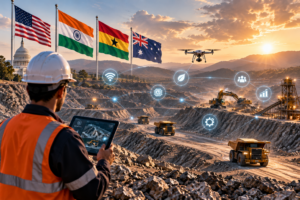
The need for this type of testing is becoming more important as mines adopt automation, advanced sensors, digital systems and new processing technologies.
Missouri S&T puts comminution in focus
Advanced comminution is one of the main areas included in the Missouri project.
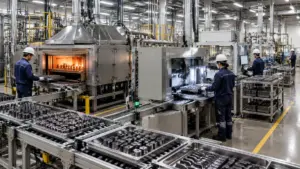
Comminution covers the crushing and grinding stages used to reduce mined material before further processing. These operations can consume significant energy, making efficiency a continuing concern for mineral processors.
The Missouri S&T proving ground will provide an environment for researchers to investigate advanced approaches to comminution alongside other mining technologies.
That combination gives the project a broader scope than underground equipment alone.
Mining technology does not stop at the mine face. Technologies used to break, size and prepare mineral-bearing material can also influence the performance of the wider processing operation.
Testing those technologies outside a laboratory can provide developers with information that controlled experiments cannot fully reproduce.
Four proving grounds cover different technologies
Missouri S&T is one of four projects selected through the DOE’s Mine of the Future initiative.
Each project has a different technology focus.
An Innovative Wireless Technologies project will establish a testbed covering underground and surface mining environments in West Virginia, Colorado and Virginia.
The University of Arizona will develop an underground testbed in Arizona. Its work will include mining technologies related to electrification and energy management.
Southern Methodist University will establish a synthetic mine environment in Texas. The facility will support work involving technologies such as advanced drilling and sensing.
Missouri S&T’s project will focus on underground technology testing and advanced comminution.
Together, the four projects create a distributed testing network rather than a single national facility.
That approach allows different mining technologies to be tested in environments suited to their specific applications.
It also gives the DOE program a broader role in the development cycle. Instead of supporting research alone, the initiative creates infrastructure for demonstration and technology validation.
The critical-minerals connection
The mining technology proving ground program also fits into the U.S. government’s wider effort to strengthen domestic critical-mineral supply chains.
DOE’s Office of Critical Minerals and Energy Innovation supports research, development, demonstration and deployment across the critical-materials sector. The department has also funded projects focused on improving domestic mineral processing and other parts of the supply chain.
The connection should be viewed in context.
A technology proving ground does not create a new supply of critical minerals by itself. Its role comes earlier in the development chain. It can help researchers and companies test technologies that may eventually improve extraction, processing, energy use or operational efficiency.
For the United States, that technology layer is becoming an important part of the broader effort to build domestic mineral supply chains.
The DOE announcement therefore places mining technology development alongside the wider policy push around critical minerals, rather than treating technology as a separate issue.
Training workers for the mine of the future
Workforce development is another part of the proving-ground model.
Modern mining is changing the skills required on site. Automated equipment, digital monitoring and advanced sensing systems require workers who can operate, maintain and interpret increasingly complex technologies.
A dedicated testing environment can allow those skills to develop alongside the technology.
For a university-led project, that creates a direct link between research and training. Students, engineers and industry personnel can gain practical exposure to emerging systems before they become part of routine mining operations.
That is also consistent with the wider idea behind the Mine of the Future initiative.
The future mine will depend on more than new machines and software. It will also need workers who understand how those systems operate and how they fit into mining processes.
The harder test comes after development
Federal funding can create the infrastructure needed to test mining technologies. The more difficult stage comes when those technologies move toward commercial operations.
A system that performs well in a controlled environment still has to meet the technical, operational and economic requirements of an actual mine.
That is where the value of a proving ground will ultimately be tested.
Developers can use these facilities to identify weaknesses earlier, collect operating data and refine systems before commercial deployment. Mining companies, in turn, can gain more information about technologies before committing them to full-scale operations.
For Missouri S&T, the DOE selection creates an opportunity to become part of that process.
The project is therefore about more than expanding university research. It is part of a U.S. effort to build the testing infrastructure required for the next generation of mining technology.
The real measure of the project will come later, when technologies tested at the proving ground begin moving into commercial mining operations.
That transition — from a technology that works in a controlled environment to one that can meet the demands of a producing mine — will be the project’s most important test.