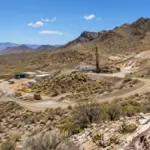
El Barqueño is an exploration-stage gold-silver-copper property in Jalisco, Mexico.

By Mo Shine
Luca Mining Corp. has agreed to acquire the El Barqueño gold-silver-copper project in Jalisco, Mexico, from Agnico Eagle Mines in a transaction valued at up to $60 million, expanding the mid-tier producer’s development pipeline while taking on significant permitting and exploration risk.
The agreement gives Luca 100% of the 32,000-hectare property, located about 100 kilometres west of Guadalajara near the municipality of Guachinango. The project contains a historical estimate of 399,265 ounces of indicated gold equivalent and a further 650,046 ounces of inferred gold equivalent, according to Luca.
The transaction is expected to close in the fourth quarter, subject to regulatory approvals, including authorization from Mexico’s Federal Economic Competition Commission and the TSX Venture Exchange.

Luca announced the agreement with Agnico on Sept. 17. The company currently operates the Campo Morado polymetallic mine in Guerrero and the Tahuehueto gold-silver mine in Durango.

The deal adds a large exploration property to Luca’s existing Mexican production base, but El Barqueño is not yet a construction-ready mine. It has no current NI 43-101 mineral resource estimate or feasibility study, and new exploration drilling is currently restricted by an environmental land-use program in Jalisco.
Deal structure limits upfront cash
Luca will issue $10 million in common shares to Agnico Eagle when the transaction closes. No cash payment is due at closing.

A further $30 million is tied to development milestones:
| Payment | Trigger |
|---|---|
| $15 million | Three months after the first drilling program begins |
| $15 million | Achievement of commercial production |
| Up to $20 million | $5 million for each 100,000 gold-equivalent ounces produced, capped at 400,000 ounces |
Luca can satisfy the $30 million in deferred payments with cash, shares or a combination of both, subject to the terms of the agreement. That gives the company flexibility during the exploration and development phases, although share-based payments could increase dilution for existing shareholders.
Agnico will also retain a 2% net smelter return royalty on metal production from areas containing currently defined mineral resources. Luca will have the right to buy back half of that royalty, reducing it to 1%, for $12.5 million.
The structure gives Agnico immediate equity exposure to Luca while preserving potential future value if El Barqueño advances into production.
What is El Barqueño?
El Barqueño is a gold-silver-copper property with a substantial historical exploration database. Agnico completed approximately 225,000 metres of drilling between 2015 and 2018 after acquiring the project through its purchases of Cayden Resources and Soltoro. Total historical drilling at the property is approximately 300,000 metres.
Mineralized zones have been identified across eight areas, divided broadly into northern and southern deposits. The northern group includes Azteca-Zapoteca-Cuauhtémoc, Angostura, Peña de Oro and Socorro. The southern group includes El Rayo, Soledad, Bolas and Highway.
The geology includes volcanic rocks and intrusive bodies. Luca says mineralization is primarily associated with vein-breccia structures, quartz veins, stockwork breccias and fault-vein systems. Identified sulphide minerals include pyrite, chalcopyrite, galena, sphalerite and chalcocite.
Luca believes the property may support both open-pit and underground mining methods, but that assessment remains conceptual. Further drilling, engineering work, metallurgical testing and permitting would be required before any mine plan could be considered.

Drill core review will be required to verify historical exploration results and support a current resource estimate.
Historical resource requires verification
The historical estimate reported by Luca comprises:
- 399,265 ounces of indicated gold equivalent at 1.47 grams per tonne.
- 650,046 ounces of inferred gold equivalent at 1.43 grams per tonne.
Luca has cautioned that the figures are historical and should not be treated as a current mineral resource under National Instrument 43-101. A qualified person has not completed sufficient work to verify the historical drilling, sampling, assaying, geological interpretation or economic assumptions.
The company plans to prepare a current mineral resource estimate after closing. That work will require a review of historical records and assays, validation of drilling methods, updated metal-price assumptions and potentially additional drilling.
The distinction matters for investors and potential project partners. A historical estimate can indicate exploration potential, but it cannot be used as a substitute for a current resource in economic studies or mine financing.
Luca’s next technical milestones will therefore be less about immediate production and more about data validation, permitting and resource conversion.
Permitting is the immediate obstacle
El Barqueño is not currently permitted for exploration drilling because portions of the property are covered by the Jalisco Regional Ecological Territorial Planning Program, known as POETR.
Luca and Agnico are involved in an amparo proceeding before the Fourth District Court for Administrative Matters in Jalisco. An amparo is a Mexican legal process used to challenge acts or omissions by government authorities on constitutional grounds.
The legal action concerns the application of POETR to mining concessions that were granted before the program was created. Luca said it intends to continue pursuing a legal pathway to clarify the exploration and development position of the concessions.
Until the permitting issue is resolved, Luca may be unable to carry out the drilling needed to update the resource or test priority targets.

Permitting and environmental access will determine how quickly exploration can resume.
Why Agnico is selling
Agnico’s announcement did not provide a detailed explanation for the divestment. However, the transaction transfers a large, exploration-stage project with unresolved drilling access to a Mexico-focused mid-tier company while allowing Agnico to retain economic exposure through shares, milestone payments and a royalty.
The arrangement is consistent with the way major mining companies often manage non-core exploration assets. A large producer can reduce direct capital commitments while preserving upside if another operator advances the property.
El Barqueño’s current profile also helps explain the fit. The project has a significant historical database and established mineralized zones, but it is not yet a permitted development asset. Its value depends on resolving the POETR issue, confirming the historical resource and determining whether the deposits can support an economically viable mining plan.
For Agnico, those tasks may compete for capital and technical resources with larger or more advanced projects. For Luca, the project could become a flagship growth asset if the company can apply its Mexican operating experience and move the property through the permitting process.
That does not remove the risk. It shifts responsibility for the next stage of de-risking from a major producer to a smaller company with more limited financial resources.
What it means for Luca’s pipeline
The acquisition gives Luca a third major Mexican asset and broadens its exposure across gold, silver and copper. It also creates potential operating and technical links with the company’s existing mines, although El Barqueño is located in Jalisco while Campo Morado and Tahuehueto are in Guerrero and Durango, respectively.
Luca Chief Executive Dan Barnholden described the project as aligned with the company’s strategy of using its in-country expertise to de-risk Mexican mining projects. Vice President of Exploration Paul Gray pointed to the property’s infrastructure, exploration database and untested targets.
The company’s ability to advance El Barqueño will depend on capital allocation. Luca is already operating mines while funding exploration and development work across its portfolio. Adding a large property can improve long-term optionality, but it can also spread technical teams and financing capacity across too many targets.
The acquisition comes as mining M&A continues to favor staged transactions. Recent deals have increasingly combined equity consideration, royalties and milestone payments rather than requiring juniors to fund large cash purchases upfront. Skillings has examined this trend in its coverage of mining M&A deals and transaction risk.
For the Mexican mid-tier gold sector, the deal reinforces the role of local operators as buyers of assets that remain strategically interesting but are not immediate priorities for major producers. It also highlights the growing importance of permitting, land-use rules and community relationships in determining the value of exploration properties.
Investor take: an option on execution, not near-term production
A Cramer-style investor screen would likely focus on the transaction’s asymmetry: Luca is gaining a large land package and historical resource base with limited upfront cash, while Agnico keeps exposure to future success.
The positive case rests on three developments: the POETR challenge is resolved, historical drilling supports a current resource, and Luca identifies a mine plan that can be financed without excessive dilution.
The downside case is equally direct. Permitting could take longer than expected, the historical estimate could fail to convert into a current resource, or Luca could need substantial new capital before the project reaches a development decision.
The transaction should therefore be viewed as a strategic exploration acquisition rather than an addition to near-term production. The key indicators will be transaction closing, the outcome of the amparo proceeding, the start of permitted drilling, publication of a current resource estimate and evidence that Luca can prioritize El Barqueño alongside its operating mines.
That is the test for Luca’s Mexico strategy: whether El Barqueño becomes a verified development opportunity or remains a large but inactive exploration holding.
Social snippet
LinkedIn/X: Luca Mining is acquiring Agnico Eagle’s 32,000-hectare El Barqueño gold-silver-copper project in Mexico for up to $60 million, mostly through staged payments and shares. The deal offers Luca exploration upside but leaves permitting, resource verification and financing as the key tests. #MiningNews #GoldMining #MiningMA #Mexico
Sources: Luca Mining transaction announcement, El Barqueño project overview, Mining Weekly coverage, and Skillings’ gold mining news coverage.