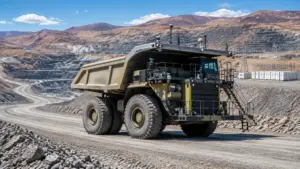
Global lithium production is tracking toward unprecedented volumes in 2026, with industry forecasts pointing to output exceeding 175,000 metric tons of refined lithium carbonate equivalent: a figure that would cement the battery metal’s status as the world’s most strategically critical mineral outside the rare earths complex.

The production surge comes at a paradoxical moment. After a brutal 2025 marked by oversupply and collapsing spot prices, the lithium sector is entering what analysts are calling a “rebalancing year” rather than an explosive growth phase. But the numbers tell a more complex story than simple supply-demand equations would suggest.
Demand Drivers Remain Relentless
The electric vehicle sector continues to anchor lithium consumption, accounting for roughly 65% of global demand. Total lithium demand hit approximately 285,000 metric tons LCE in 2025, and projections for 2026 range from 15% to 18% growth year-over-year. That puts theoretical 2026 demand somewhere north of 327,000 metric tons: a figure that would dwarf the refined production capacity currently online.

But here’s where the production forecast gets interesting. The gap between announced capacity and actual output remains massive. Environmental permitting delays, infrastructure bottlenecks, and capital expenditure shortfalls mean that projects routinely lag their own timelines by 12 to 24 months. So while nameplate capacity might suggest the industry can flood the market, real-world lithium extraction and refining rarely hits those targets.
More Read

Energy storage systems represent the sector’s fastest-growing demand segment. Battery installations for grid-scale storage posted 44% growth in 2025 compared to 25% for total battery demand. That divergence matters because stationary storage uses different battery chemistries: often lithium iron phosphate (LFP): which require higher volumes of lithium carbonate per kilowatt-hour than the nickel-manganese-cobalt (NMC) chemistries favored in premium EVs.

The automotive transition isn’t slowing. China’s domestic EV penetration rate crossed 40% of new vehicle sales in late 2025, while European markets hit similar milestones despite macroeconomic headwinds. North American production is finally scaling after years of false starts, with battery megafactories in Michigan, Georgia, and Tennessee ramping output through Q1 2026.
Supply Geography Concentrates Risk
Australia, Chile, and China dominate the lithium supply chain, but their roles differ dramatically. Australia mines roughly 50% of global lithium from hard-rock spodumene deposits, shipping ore concentrate to China for refining. Chile and Argentina extract lithium from brine operations in the Atacama Desert and neighboring salt flats: a process that takes 12 to 18 months from pumping to finished lithium carbonate.
More Read


China controls approximately 60% of global lithium refining capacity, a chokepoint that has Western governments scrambling to build domestic processing infrastructure. The U.S., Canada, and the European Union have collectively announced over $12 billion in subsidies and loan guarantees for lithium refining projects since 2024, but most won’t reach commercial production until 2027 or later.
The production forecast for 2026 assumes that Chinese refiners continue operating at high utilization rates despite profit margins that turned negative in Q3 2025. That assumption carries significant risk. High-cost producers across Australia and China have already curtailed output, with at least four major operations entering care-and-maintenance mode in the final quarter of 2025.
Market participants are watching inventory levels closely. Lithium carbonate and lithium hydroxide stockpiles tightened through late 2025 as automotive OEMs accelerated purchases ahead of anticipated price increases. Those drawdowns suggest that even modest production shortfalls could trigger price volatility in H1 2026.
Strategic Competition Intensifies
The White House recently announced a “critical minerals blitz” aimed at securing long-term supply agreements outside Chinese-controlled value chains. Commerce Secretary Howard Lutnick is leading negotiations with Australian, Canadian, and Chilean producers to lock in offtake contracts tied to U.S. battery manufacturing incentives.

These diplomatic maneuvers reflect a broader recognition that lithium isn’t just another commodity: it’s the linchpin of decarbonization infrastructure. Without secure lithium supplies, the energy transition stalls. European policymakers have reached similar conclusions, with the EU’s Critical Raw Materials Act setting targets for 40% domestic processing of strategic minerals by 2030.
Industry executives remain cautious about declaring victory over supply constraints. “We’ve seen multiple cycles where production forecasts looked robust on paper but actual deliveries fell short,” noted one battery procurement manager at a major U.S. automaker. “The 175,000-ton threshold is achievable, but it assumes everything goes right: permitting, weather, labor, logistics. That rarely happens.”
Lithium hydroxide production faces particularly acute bottlenecks. The compound is essential for high-nickel cathode chemistries used in long-range EVs, and converting lithium carbonate to hydroxide requires additional processing steps that many facilities lack. Analysts estimate that hydroxide will trade at a 15% to 20% premium over carbonate through most of 2026.
Price Dynamics Remain Unpredictable
Spot lithium carbonate prices collapsed from over $80,000 per metric ton in early 2023 to under $12,000 by mid-2025: a decline that gutted producer margins and triggered widespread cost-cutting. But long-term contract pricing tells a different story. Automakers and battery makers locked in multi-year supply agreements at prices ranging from $18,000 to $25,000 per ton, insulating them from spot market chaos.
Those contracts expire on rolling schedules through 2026 and 2027, setting up potential renegotiations that could either stabilize prices or trigger renewed volatility depending on how actual production tracks against demand. If the 175,000-ton production target materializes but demand growth accelerates beyond 18%, prices could firm quickly. If production overshoots or EV adoption slows, the oversupply dynamic extends.

Investors are pricing in the uncertainty. Lithium producer equities posted mixed returns through Q4 2025, with hard-rock miners outperforming brine operators due to faster production cycles and lower capital intensity. Exploration and development stocks remain depressed, reflecting skepticism that junior projects can secure financing in the current environment.
Infrastructure Gaps Persist
Even if miners extract record volumes of lithium-bearing ore or brine, getting that material to market requires infrastructure that doesn’t fully exist yet. Port capacity in Western Australia is maxed out, forcing some producers to queue shipments for weeks. Rail networks in Argentina’s Jujuy province can’t handle projected brine output from new operations slated to start production in 2026.
Processing capacity represents another constraint. Converting spodumene concentrate into battery-grade lithium carbonate requires kilns, leaching circuits, and purification systems that take 24 to 36 months to build and commission. China added significant refining capacity in 2024 and 2025, but much of that sits idle due to weak margins.
Western nations face a chicken-and-egg problem: they need domestic refining to secure supply chains, but refiners won’t invest without long-term offtake commitments, and battery makers won’t commit without confidence that projects will actually deliver. Government subsidies help bridge that gap, but execution risk remains high.
The 2026 production outlook hinges on whether operators can navigate these bottlenecks without major disruptions. Weather events in Chile, labor disputes in Australia, or regulatory changes in China could easily shave 10,000 to 15,000 tons off global output: enough to swing markets from balance to deficit.
What Comes Next
The lithium sector enters 2026 in a state of cautious optimism tempered by hard-won lessons from previous boom-bust cycles. Production is rising, demand shows no signs of structural weakness, and governments are finally treating lithium as the strategic asset it clearly is. But translating capacity into actual metal shipments requires flawless execution across multiple geographies and regulatory regimes.
For mining executives, battery manufacturers, and policymakers, the next 12 months will determine whether the energy transition proceeds on schedule or hits a lithium-shaped roadblock. The raw material exists in the ground. The challenge is getting it out, refined, and delivered before the next wave of gigafactories comes online demanding feed.
The 175,000-ton milestone matters not because it’s a round number, but because it represents the minimum threshold to keep automotive electrification on track without price shocks that would undermine consumer adoption. Whether the industry hits that target depends less on geology than on grinding operational execution: permitting, construction, logistics, and all the unglamorous work that turns rock into batteries.