By Charles Pitts and Penny Laneford

KOLWEZI, Democratic Republic of the Congo : Environmental, Social, and Governance (ESG) metrics in the mining sector are frequently dismissed as high-priced PR exercises. But the reality is far more pragmatic. In a global market hurtling toward a massive structural deficit, ESG certification is no longer a “nice-to-have” addition to an annual report. It is becoming a mandatory license to operate and, more importantly, a license to trade on the world’s premier metal exchanges.
Eurasian Resources Group (ERG) announced this week that its Metalkol operation, located in the Lualaba Province of the Democratic Republic of the Congo (DRC), has become the first tailings reprocessing facility globally to earn The Copper Mark.
The distinction is significant. Unlike traditional primary mines that extract ore from the earth, Metalkol is a “waste-to-metal” project. It reprocesses historical tailings: the leftovers of decades of previous mining activity in the Kolwezi area: to produce high-grade copper cathode and cobalt hydroxide. By securing The Copper Mark, ERG has validated that “circular” mining can meet the same rigorous sustainability standards as the world’s largest primary Tier-1 assets.
The Strategic Calculus of Certification
The strategic calculus here isn’t subtle. As the industry faces a copper deficit in 2026, estimated to reach an 800,000-tonne supply gap, the origin of every pound of metal is being scrutinized by end-users ranging from EV manufacturers to AI data center developers.
More Read

Metalkol’s achievement involves a rigorous, third-party assessment of 32 different criteria. These cover everything from greenhouse gas emissions and water management to human rights and community grievance mechanisms. For an operation situated in the DRC: a jurisdiction often unfairly painted with a broad brush of “high risk”: this certification serves as a powerful counter-narrative.

“Securing The Copper Mark for a tailings operation proves that the circular economy isn’t just a buzzword for the mining industry,” said a representative from the assurance framework. “It demonstrates that legacy waste can be transformed into critical minerals while adhering to the highest international standards.”
Why The Copper Mark Matters in 2026
The Copper Mark is an independent assurance framework launched in 2019, originally inspired by the United Nations Sustainable Development Goals. It is specifically designed to align with the OECD Due Diligence Guidance for Responsible Supply Chains of Minerals.
More Read
For ERG, this isn’t just about optics. The London Metal Exchange (LME) has implemented strict responsible sourcing requirements. To remain “LME-grade,” producers must demonstrate compliance with environmental and occupational health and safety management systems. Earning The Copper Mark provides a streamlined pathway to meeting these LME requirements.

In a market where AI and data centers are outpacing global production, the premium on “clean” copper is expected to rise. Buyers are no longer just looking for volume; they are looking for volume that doesn’t carry reputational risk. Metalkol’s output is now positioned at the front of the line for western OEMs who are under immense pressure to audit their supply chains.
Breaking Down the Metalkol Operation
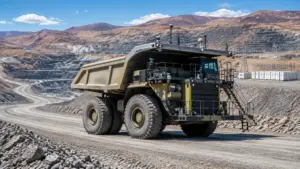
Metalkol is not a small-scale pilot project. It is one of the world’s largest producers of cobalt and a top-tier copper producer. The facility remines tailings that were discharged into the Musonoi River valley over nearly half a century of mining by previous operators.
The process is technically demanding. It involves hydraulic mining: using high-pressure water jets to turn the dry tailings back into a slurry: which is then pumped to a centralized leaching and solvent extraction-electrowinning (SX-EW) plant.
| Metric | Detail |
|---|---|
| Location | Kolwezi, Lualaba Province, DRC |
| Primary Output | Copper Cathode & Cobalt Hydroxide |
| Feedstock | Historical Tailings (Waste) |
| Annual Copper Capacity | Approx. 120,000 tonnes |
| Annual Cobalt Capacity | Approx. 25,000 tonnes |
| Assurance Standard | The Copper Mark |
By cleaning up these legacy tailings, ERG is effectively performing environmental remediation while generating a profit. It’s a model that many believe is the future of the industry, especially as the luxury of discipline prevents majors like BHP from chasing low-quality M&A deals in favor of optimizing existing or brownfield assets.
Addressing the DRC Challenge
It is impossible to discuss mining in the DRC without addressing the social context. For years, the region has been scrutinized for artisanal mining practices and human rights concerns. ERG’s response was the “Clean Cobalt & Copper Framework,” launched in 2018 and expanded in 2021.
This framework, which is audited annually by PwC, served as the foundation for the Metalkol Copper Mark application. The Copper Mark requires a deep dive into “Material Environmental, Social, and Governance (ESG) issues.”
Here is the kicker: Metalkol didn’t just pass; it set a precedent for how tailings operations must be evaluated. Standard mining audits usually focus on the impact of creating a tailings dam. Metalkol’s audit had to account for the impact of removing one, which involves different water management risks and community health considerations.
The 2026 “Copper Crunch” Context
The timing of this certification is critical. As we head into mid-2026, the global copper market is expected to enter a period of extreme volatility. Supply from traditional mines in Chile and Peru is stagnating due to declining ore grades and protracted permitting timelines.

While the industry debates whether M&A mania or technology-first innovation will solve the supply crisis, Metalkol offers a third path: resource recovery. There are hundreds of millions of tonnes of tailings sitting in dams across the Copperbelt. Metalkol has proven that this “waste” can be converted into certified, high-grade supply.
That’s not a rounding error. That’s a lifeline for a market that is fundamentally undersupplied.
ESG as a Competitive Advantage
There is a growing divide in the mining world between “certified” and “unverified” metal. We are seeing a bifurcated market where companies that cannot prove their ESG credentials are forced to sell into less transparent markets at a discount.
“The strategic calculus here isn’t subtle,” says one analyst. “If you are a Tier-1 miner and you aren’t chasing these certifications, you are effectively pricing yourself out of the Western supply chain by 2027.”
ERG’s Metalkol has now neutralized that risk. By aligning with The Copper Mark, they have essentially future-proofed their DRC exports. This is particularly vital given the geopolitical tensions surrounding critical minerals. As export controls on materials like gallium and germanium tighten, the reliability and “cleanliness” of copper and cobalt sources become matters of national security for many G7 nations.
Technical Hurdles and the Road Ahead
The road to earning The Copper Mark wasn’t a simple paperwork exercise. The assurance process is a multi-step journey:
- Letter of Commitment: Signed in late 2024.
- Self-Assessment: A rigorous internal audit against 32 criteria.
- Third-Party Assessment: Independent auditors spent weeks on-site at Metalkol, interviewing workers, testing water samples, and reviewing financial flows.
- Assurance: The final determination by The Copper Mark’s independent board.
Metalkol must now undergo a re-assessment every three years to maintain the seal. This creates a “continuous improvement” loop that forces the operation to stay ahead of evolving ESG expectations.
The Conclusion for Investors and Operators
For the broader mining industry, Metalkol’s success is a signal. The “tailings-to-revenue” model is no longer a theoretical niche; it is a proven, ESG-compliant industrial reality.
As we look toward the remainder of 2026, expect to see a rush of other tailings operations: particularly in Australia and North America: attempting to replicate this certification process. They have to. Because in a world of high-speed electrification and AI-driven demand, “dirty” copper is becoming increasingly difficult to sell.
The strategic shift is clear: The industry is moving from an era of “digging more” to an era of “recovering better.” ERG’s Metalkol didn’t just earn a badge this week; it provided a roadmap for how the world’s most challenging jurisdictions can meet the world’s highest standards.

Metalkol has proven that you can turn a legacy environmental liability into a certified strategic asset. In the brutal numbers of the 2026 copper market, that isn’t just good for the planet: it’s essential for the bottom line. The clock is ticking on the global supply gap, and operations that can prove their pedigree will be the ones that capture the premium.