The 1,000th Komatsu autonomous truck enters service at Nevada Gold Mines.

By Charles Pitts
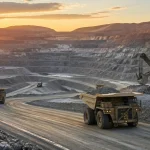
ELKO, Nevada — Komatsu has commissioned its 1,000th autonomous ultra-class haul truck at Barrick Gold’s Nevada Gold Mines (NGM), a milestone that marks the first time an original equipment manufacturer has reached that scale in mining autonomy.
The truck is a 930E-5AT electric drive model. Its delivery to Nevada matters because it shows how autonomous haulage has moved from trial phase to core mine infrastructure at large open-pit operations.
Why the milestone matters
The achievement is more than a fleet number for the Japanese equipment maker. It signals the maturity of Komatsu’s FrontRunner Autonomous Haulage System, which has moved more than 11.5 billion metric tons of material since its commercial debut in 2008.
More Read

For operators at NGM, the 1,000th truck is a practical endorsement of a technology once viewed as a high-risk experiment in modern open-pit mining.

Scale built over nearly two decades
When Komatsu first introduced AHS, the focus was on safety and gradual productivity gains. Today, however, the system operates at a scale that is reshaping the cost profile of Tier-1 mining assets.
The 930E-5AT commissioned in Nevada carries a 290-metric-ton payload. It is part of a broader autonomous fleet that now operates across North America, South America, Australia, and Europe.
More Read

According to Komatsu, the 930E ultra-class electric drive truck is now the industry’s most widely deployed autonomous model, with more than 500 units in operation globally. The concentration of those trucks at NGM, a joint venture between Barrick Gold and Newmont, underlines Nevada’s role as a proving ground for large-scale industrial AI.

Komatsu’s FrontRunner system has moved over 11.5 billion metric tons of material globally.
Social and financial impact
Productivity metrics such as cycle times and fuel efficiency remain standard benchmarks. However, Komatsu has added another measure to its 2026 reporting: quantified social impact.
In a joint analysis with the Capitals Coalition and Value Balancing Alliance, verified by ABeam Consulting Ltd., Komatsu estimated that FrontRunner generated about $2.4 billion in social impact globally in 2024.
That estimate includes reduced site accidents, lower carbon emissions from optimized driving patterns, and workforce upskilling for autonomous systems. For investors, the figure offers a more detailed view of ESG performance because it ties operating technology to measurable outcomes rather than broad sustainability claims.
It also points toward concrete valuation metrics that connect automation with longer-term risk mitigation.
| Key Metric | Data Point |
|---|---|
| Total Autonomous Trucks Commissioned | 1,000 Units |
| Primary Model Deployed | Komatsu 930E-5AT |
| Total Material Moved (AHS) | 11.5 Billion Metric Tons |
| Annual Social Impact (2024) | $2.4 Billion (Est.) |
| Regional Focus | Nevada, USA; Pilbara, Australia; Atacama, Chile |
Decarbonization and the power-agnostic shift
The commissioning of the 1,000th truck comes as Komatsu pushes further into decarbonization. The company recently said it had successfully operated a “power-agnostic” electric drive truck in autonomous mode.
That system allows a truck to run while connected to a dynamic trolley line, drawing power directly from the grid instead of relying only on onboard diesel or battery reserves.
The integration of autonomous haulage with trolley systems addresses a central industry challenge: cutting Scope 1 emissions without reducing ultra-class haulage capacity. Because uphill hauls typically consume the most fuel, automated connection and disconnection from trolley lines can help operators maintain speed while reducing energy use.
It also removes some of the steering variability that can arise under heavy electrical load. However, wide deployment will still depend on mine-site power infrastructure and capital spending priorities.

The shift toward power-agnostic electric drive trucks is central to Komatsu’s decarbonization strategy.
Operational reliability at Nevada Gold Mines
Nevada Gold Mines is one of the more complex environments for autonomous systems. The volume of material is high, and manned and unmanned equipment often operate in close proximity. Because of that, the site requires a level of system coordination that was rare a decade ago.
FrontRunner manages path planning, obstacle detection, and truck positioning at both the shovel and dump point. Those functions are central to keeping autonomous fleets productive in large open-pit settings.
“Reaching the 1,000th truck milestone is a testament to our partnership with customers like Barrick and Nevada Gold Mines,” a Komatsu representative said during the commissioning. “The goal has shifted from ‘Can we do this?’ to ‘How far can we take the efficiency of these 11.5 billion tons?’”
The system’s reliability has helped NGM maintain steady production during labor shortages that have affected other mining regions. By moving some roles from the cab to the control room, the operation has reduced its dependence on immediate local labor availability. That shift is expected to accelerate as more mining and metals companies face new challenges.
What comes next for autonomous haulage
As the industry moves toward 2030 decarbonization targets, automation and electrification are likely to shape a growing share of mine capital spending. Komatsu’s roadmap suggests the next 1,000 trucks could include more zero-emission power options, including hydrogen fuel cells and high-density battery systems, under the FrontRunner platform.
The Nevada Gold Mines deployment offers a blueprint for other operators. However, adoption will vary by commodity, power access, terrain, and labor conditions.
For the wider sector, the direction is becoming clearer. Autonomous haulage is no longer limited to the biggest miners because it is increasingly tied to cost control, safety, and emissions performance in a high-cost, lower-carbon operating environment.

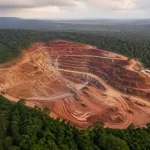
Nevada Gold Mines serves as a primary hub for large-scale autonomous mining deployment.