By Penny Laneford | January 22, 2026

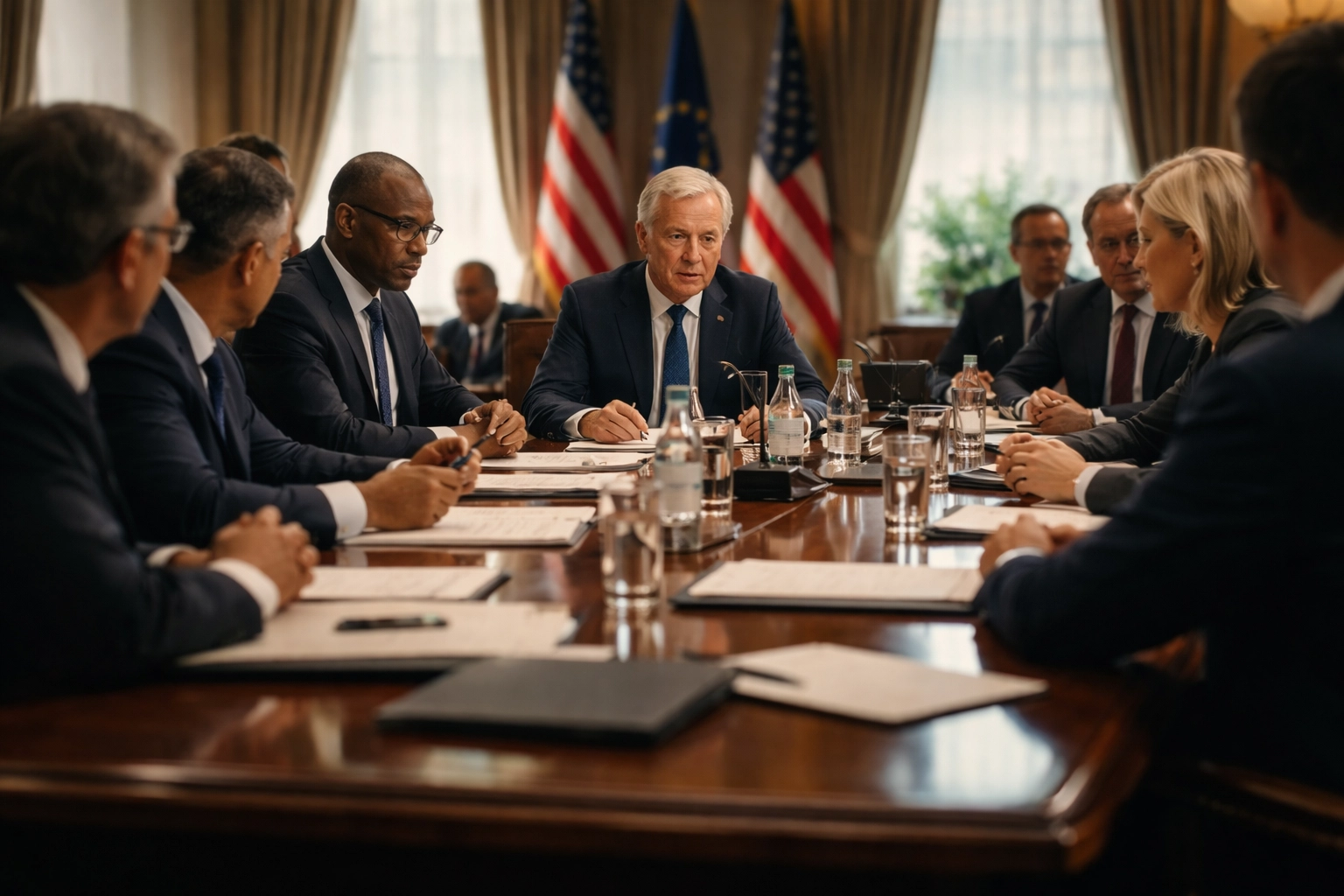
Washington is done playing nice. The United States is now leveraging every diplomatic and trade lever at its disposal to pull allied nations into a coordinated effort to break China’s stranglehold on critical mineral supply chains: and the pressure is intensifying by the week.
The push represents a fundamental shift in American resource strategy. Rather than chasing the pipe dream of mineral self-sufficiency, the administration has pivoted hard toward building an international coalition: call it a “Critical Minerals Club”: that pools the mining, processing, and trading capacity of G7 nations and strategic partners worldwide.
The stakes are enormous. The clean energy transition, advanced semiconductor manufacturing, and defense industrial capacity all hinge on reliable access to lithium, copper, cobalt, and rare earth elements. And right now, that access runs almost entirely through Beijing.
The Vulnerability Problem
Here’s the uncomfortable truth that’s driving policy in Washington: the United States is fully import-dependent for 12 critical minerals and relies on foreign sources for more than half its consumption of an additional 29 minerals. That’s not a supply chain: that’s a supply prayer.
More Read



The numbers get worse when you look at processing. China produces only about 10 percent of global lithium, cobalt, and copper at the mine level. But it controls an estimated 40 to 90 percent of the world’s processing capacity for these materials. Raw ore means nothing if you can’t refine it, and Beijing knows that better than anyone.
China made that leverage crystal clear in April 2025 when it slapped export restrictions on critical minerals used in defense applications and semiconductor manufacturing. The message was unmistakable: cross us, and your supply lines go dark.
More Read
Executive Action Sets the Tone
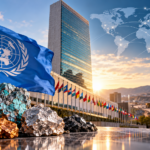
President Trump’s January 15, 2026 executive order on critical minerals marks the most aggressive federal intervention in resource diplomacy in decades. The order doesn’t mince words: it explicitly directs the secretary of commerce and the U.S. trade representative to negotiate bilateral agreements that secure adequate supplies of processed minerals from foreign partners.
The kicker? If negotiations fail, the order contemplates trade remedies including tariffs and import restrictions on non-compliant nations. In other words, play ball with America’s mineral security strategy or face economic consequences.
“No single country can secure these supply chains alone,” the order states, acknowledging that the era of American resource independence is over before it ever really began.
The administration isn’t waiting around for multilateral consensus either. During Trump’s second term, bilateral agreements have been pursued or finalized with an eclectic mix of partners: Ukraine, Saudi Arabia, Thailand, Malaysia, Japan, and the Democratic Republic of the Congo. Each deal focuses on different elements of the supply chain: upstream investment in one country, processing cooperation in another, long-term offtake arrangements in a third.
The Kazakhstan Play
Perhaps the most revealing move in this diplomatic chess match came in November 2025, when Kazakhstan became the first country with preexisting ties to Israel to join the Abraham Accords. On the surface, it looked like a Middle East peace initiative. Beneath that surface, it was pure mineral strategy.
Kazakhstan either produces or holds reserves of nearly half of the 60 critical minerals deemed vital to U.S. national security. The Central Asian nation sits on massive deposits of uranium, chromium, titanium, and rare earth elements. Bringing it into a broader diplomatic framework: one that now includes economic and security cooperation channels: gives Washington a backdoor into resource access that doesn’t route through Chinese processing facilities.
The administration isn’t stopping there. Diplomatic overtures are now targeting Uzbekistan, Tajikistan, Kyrgyzstan, and Azerbaijan: all mineral-rich former Soviet states that have historically operated in Russia and China’s orbit. The pitch is straightforward: join the Western economic architecture and gain access to investment capital, technology transfers, and preferential trade terms.
Whether these nations bite remains to be seen. But the outreach signals just how far Washington is willing to reach to diversify its mineral sourcing.
Legislative Backbone
Executive orders can be reversed with a stroke of the next president’s pen. That’s why the Critical Minerals Partnership Act of 2025 matters. The legislation codifies U.S. policy around collaborative supply chain development with allied nations, covering everything from mining and processing to recycling and valuation.
The act emphasizes market-based incentives rather than command-and-control mandates. It encourages responsible investment in partner countries: investments designed to benefit local populations while simultaneously bolstering U.S. and allied mineral supplies. The political calculation is obvious: make mineral partnerships attractive enough that partner nations choose alignment over neutrality.

The legislation also creates reporting requirements that force the administration to track progress on supply chain diversification. Congress wants metrics, timelines, and accountability: not vague promises about future negotiations.
G7 Coordination Accelerates
While bilateral deals grab headlines, the quieter coordination happening within the G7 framework may prove more consequential in the long run. Finance ministers and trade officials from the United States, Canada, the United Kingdom, France, Germany, Italy, and Japan have been meeting with increasing frequency to align mineral security strategies.
The emerging framework contemplates several interconnected initiatives:
- Joint investment vehicles that pool capital for mining and processing projects in partner nations
- Coordinated stockpiling programs that create buffer supplies against Chinese export restrictions
- Harmonized environmental and labor standards that differentiate Western-backed projects from Chinese alternatives
- Technology sharing agreements that accelerate processing capacity development outside China
Canada and Australia: both G7-adjacent through various partnership arrangements: are particularly central to these discussions. Canada holds substantial lithium, nickel, and cobalt reserves, while Australia dominates global lithium production at the mine level. Getting these two countries fully integrated into a coordinated Western supply strategy is arguably more important than any single bilateral deal with emerging market nations.
Industry Response
Mining companies and downstream manufacturers are watching these developments with cautious optimism. The policy direction is clear, but execution remains uncertain.
Major miners have long complained that permitting delays and environmental litigation in the United States make domestic production economically unviable regardless of federal policy preferences. They want streamlined approvals, not just diplomatic agreements with foreign partners.
Downstream manufacturers: automakers, battery producers, electronics companies: care less about where minerals come from than about supply reliability and price stability. If the “Critical Minerals Club” delivers consistent access at competitive prices, they’ll embrace it. If it creates new bottlenecks or price premiums, they’ll find workarounds.
The wild card is China’s response. Beijing has shown repeatedly that it’s willing to weaponize mineral access when geopolitical tensions escalate. A coordinated Western effort to reduce Chinese leverage could trigger exactly the kind of aggressive countermeasures the strategy is designed to hedge against.
What Comes Next
The next 12 to 18 months will determine whether this push for allied mineral coordination produces real supply chain diversification or dissolves into bureaucratic wheel-spinning.
Key milestones to watch include the finalization of bilateral processing agreements with Japan and Thailand, progress on Abraham Accords expansion to additional Central Asian states, and the first major joint investment announcements from the G7 coordination framework.
For mining industry stakeholders, the message from Washington is unmistakable: critical mineral security now sits at the intersection of trade policy, foreign policy, and national security. Companies that position themselves as solutions to this challenge: through project development, processing capacity, or supply partnerships: stand to benefit from unprecedented government attention and capital flows.
Those waiting for the market to sort things out on its own may find themselves on the wrong side of a policy wave that shows no signs of cresting.
For more coverage on global mining developments and critical mineral markets, visit Skillings Mining Review.